

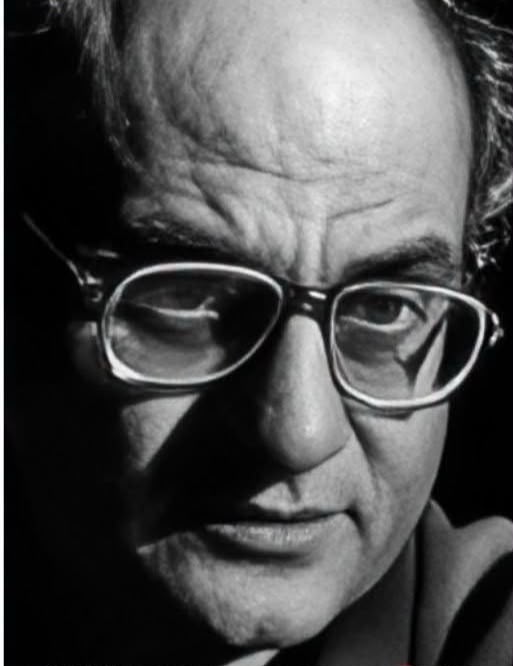
On the 15th anniversary of his death, we remember a filmmaker who treated cinema as a language of thought — austere, demanding, and endlessly generative.
Mani Kaul belonged to that rare lineage of artists who treated film not as entertainment but as an instrument for rethinking perception. Born Rabindranath Kaul in Jodhpur in 1944, he emerged from the ferment of the Film and Television Institute of India and the tutelage of Ritwik Ghatak to become one of the most uncompromising voices of the Indian New Wave. His films refused conventional exposition and easy identification; they posed questions about time, voice, and interiority and left viewers to inhabit their own responses.
A radical of form
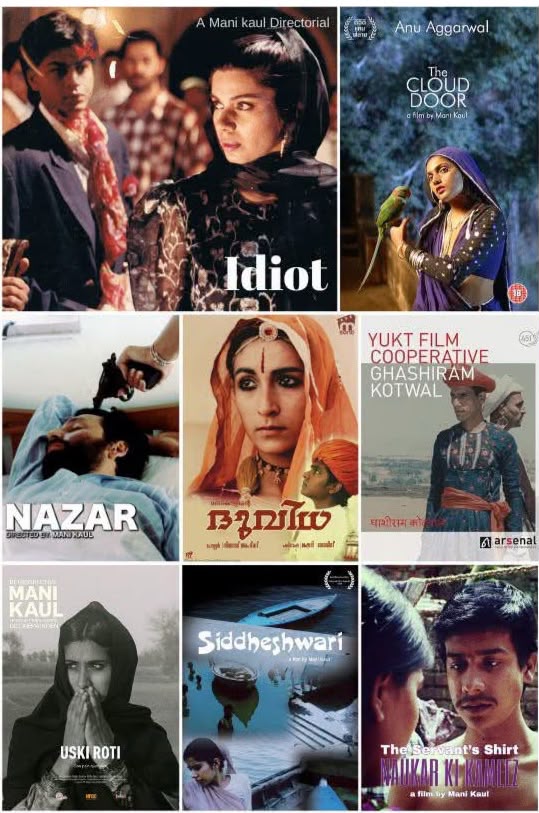
From his debut, Uski Roti (1969), Mani Kaul signalled a radical break with mainstream storytelling. Where commercial cinema choreographs emotion and plots towards resolution, Kaul’s films open onto surfaces — gestures, silences, rhythms — that resist causal clarity. Uski Roti is often described as an act of formal severance: scenes dislodge chronology, camera movement privileges the ordinary over the spectacular, and what is omitted becomes as significant as what is shown. The result is not obscurity for its own sake but an insistence that cinema can be a space for reflective, patient seeing.
This radicalism persisted across his career. Ashadh Ka Ek Din (1971) and Duvidha (1973) demonstrated his refusal to treat narrative as the only bearer of meaning. Drawing from literary and folk sources, Kaul translated texts into cinematic structures that foregrounded mood, ritual, and a careful choreography of sounds and silences. Duvidha, a colour film adapted from Rajasthani lore, earned him national and international acclaim not because it simplified the tale for wider consumption, but because it reconfigured the tale’s sensory logic on screen.
Cinema as inquiry, not illustration
Kaul’s work argued that filmmaking could be an epistemological practice — a way to ask how we know, remember, and imagine. He was fascinated by the limits of representation: the Upanishadic idea of an ungraspable self, the way personal longing resists tidy articulation, the persistence of memory in fragmentary forms. This philosophical bent made his films unevenly rewarding; they demand a viewer who will slow down, relinquish the pleasure of immediate decoding, and accept ambiguity as the film’s ethical posture.
His documentaries — Dhrupad (1982), Siddheshwari (1989), and others — showcase a related but distinct rigour. In these works Kaul’s devotion to classical music and traditional performance becomes a way to explore attention. Siddheshwari, a luminous study of the life and art of a Hindustani singer, is exemplary in how a filmmaker can translate sonic experience into visual inquiry. Unlike many directors who ornament fiction with music, Kaul kept music and narrative in different registers, treating sound as a field of study rather than mere accompaniment.
A teacher and a provocateur
Kaul’s influence extended well beyond the films that bear his name. As an educator, he shaped generations of filmmakers and critics, insisting that learning was not apprenticeship to a style but an initiation into rigorous thinking. He co‑founded the Yukt Film Co‑operative in the mid‑1970s, an effort to sustain experimental cinema against market pressures and institutional indifference. Projects such as the collective adaptation of Ghasiram Kotwal attest to his belief in collaboration as a method of invention, even when the work courted controversy or indifferent audiences.
He remained an outlier within a movement often characterized simplistically as “realist.” While the Indian New Wave foregrounded social reality, Kaul used realism as one among many tools, choosing instead to interrogate inner life, mythic structures, and the grammar of cinematic time. His films are not didactic sociological statements; they are meditations that trust the viewer to assemble meanings from residue, repetition, and the slow accumulation of image and sound.
Against cinematic spectacle
Mani Kaul’s cinema is also an argument against spectacle. In an industry that rewards instant recognition, his austere framing, long takes, and attention to quotidian textures seemed at odds with the camera-driven seductions of star culture and melodrama. Yet this is exactly why his work matters. He reminded Indian cinema — and its audiences — that the camera can insist on slowness, can make everyday gestures luminous, and can preserve moments of indirection as ethically and aesthetically valuable.
This aesthetic choice had costs. Financial backing was scarce; distribution channels for experimental work were limited; and many of his films found their earliest and most devoted audiences outside India. But the fact that his films continued to enter international festivals, archives, and curricula testified to their enduring force: they are works that expand what cinema can do to thinking itself.
The pedagogy of attention
Perhaps Kaul’s most lasting legacy is pedagogical. He taught viewers to attend — to watch films not merely for narrative satisfaction but for the way images structure thought. His students and admirers speak of a discipline of watching that he instilled: an insistence that texture, breath, and silence are not lacunae but the coordinates of meaning. In this sense Kaul belonged to a wider tradition of Indian modernists who saw the artist’s task as reorienting perception rather than reproducing social fact.
Personal affinities — for music, for classical forms, for literary echoes — never insulated him from the world. His films often return to questions of gender, caste, and belonging, but they do so through form rather than slogan. Uski Roti and Duvidha, for instance, revisit women’s interiority in ways that refuse both sentimentalization and exposition. The result is filmic empathy that is exacting, not comforting.
A voice that continues to speak
Fifteen years after his death on July 6, 2011, Mani Kaul’s films continue to be touchstones for filmmakers and cinephiles who resist commodified forms of storytelling.
His cinema is difficult because it refuses to spoon-feed; it asks for patience, curiosity, and the willingness to be partially unsettled. But for those who meet the films on those terms, the reward is considerable: a recalibration of how moving images can shape thought and feeling.
In an era of algorithmically tuned entertainment and shrinking attention spans, revisiting Kaul is an act of cultural resistance. It is a reminder that cinema can demand our full attention, can complicate our sympathies, and can remain a laboratory for formal invention. Mani Kaul’s films do not console; they interrogate. They do not answer; they insist we learn how to ask.
As scholars re-edit, festivals programme retrospectives, and new audiences discover these works online, the quiet radicalism of Mani Kaul keeps reasserting itself. His legacy is not one of easy influence but of persistent provocation: a body of work that continues to teach us how to look more carefully, to listen more intently, and to imagine cinema as a discipline of thought.

~Hasnain Naqvi is a former member of the history faculty at St. Xavier’s College, Mumbai….
The opinions expressed here are solely those of the author.

