

On 13 August 2026, Fidel Alejandro Castro Ruz would have turned 100. A century after his birth, the Cuban revolutionary remains one of the most consequential and contested figures of the modern age: admired by millions as an apostle of national dignity and social justice, condemned by others as the architect of a one-party state that extinguished political freedoms. Yet even his critics must concede that Castro altered the political vocabulary of the twentieth century—and made a small Caribbean island impossible for the world to ignore.
Castro’s life was forged in the turbulence of a Cuba dominated by foreign capital, social inequality and political instability. Born near Birán in eastern Cuba on 13 August 1926, the son of a Spanish immigrant who prospered in the sugar economy, he studied law at the University of Havana before entering politics. The 1952 coup by Fulgencio Batista, which cancelled elections and established a dictatorship, convinced the young lawyer that constitutional methods alone could not restore Cuban sovereignty.
His first attempt at revolution was a military disaster. On 26 July 1953, Castro led an assault on the Moncada Barracks in Santiago de Cuba. The attack failed, many of his comrades were killed, and Castro was imprisoned. But his courtroom defence, later published as History Will Absolve Me, transformed defeat into political theatre. It was a declaration of faith: that Cuba’s future belonged not to generals, oligarchs or foreign corporations, but to its people
.The triumph of the Sierra Maestra
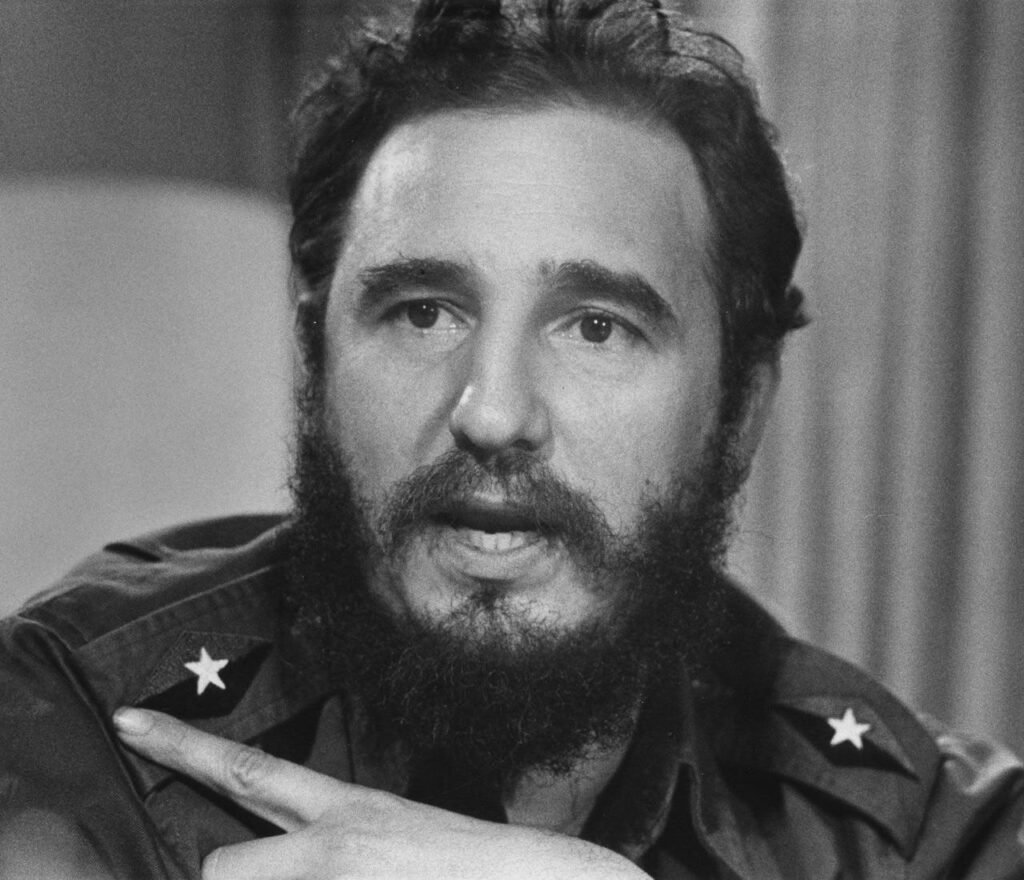
Released under an amnesty, Castro went into exile in Mexico, where he reorganised the 26th of July Movement. In December 1956, he returned to Cuba aboard the Granma with a small band of revolutionaries, among them his brother Raúl and Ernesto “Che” Guevara. Most of the expeditionaries were killed or captured. Castro and a handful of survivors retreated into the Sierra Maestra, where guerrilla warfare, political organisation and an effective propaganda campaign gradually eroded Batista’s authority.
On 1 January 1959, Batista fled Cuba. Castro’s guerrillas had defeated a much larger professional army, and the victory sent a tremor across Latin America. It demonstrated that an entrenched dictatorship could be overthrown by a disciplined insurgency that combined military action with a compelling moral and political narrative. Castro soon emerged as the undisputed leader of the revolutionary government. He ruled Cuba from 1959 until 2008, first as prime minister and later as president, transforming the country into the first communist state in the Western Hemisphere.
The revolution’s earliest achievements were sweeping. Land reform weakened the power of large estates; private industries and foreign-owned enterprises were nationalised; rural electrification expanded; and education and healthcare were declared universal public rights. The 1961 literacy campaign mobilised teachers and students across the island, reaching remote villages and sharply reducing illiteracy within a single year. A World Bank study noted that Cuba’s social-service system helped produce near-universal literacy, broad access to health services and some of the region’s lowest infant-mortality rates.
These accomplishments were not merely administrative reforms. They represented a profound redistribution of dignity. In a country where poverty and racial discrimination had long been intertwined, the revolution promised that education, medical care and social recognition would no longer be privileges reserved for the urban middle classes or the wealthy. Castro understood that a revolution survives not only through slogans, but through the daily experience of ordinary people who believe their lives have acquired greater value.
India and the language of solidarity
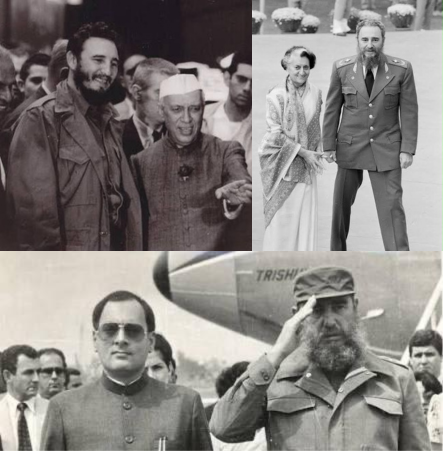
Castro’s relationship with India revealed the diplomatic and emotional dimensions of his internationalism. India was among the first countries to recognise Cuba’s revolutionary government, and Castro met Jawaharlal Nehru in New York in 1960, beginning a relationship founded on anti-colonialism, national independence and the principles of non-alignment. Nehru’s refusal to treat Cuba as a pariah impressed Castro, who regarded the Indian leader as an important moral voice of the newly independent world. Castro visited India in 1973 and again in 1983 for the Non-Aligned Movement summit in New Delhi. At the latter gathering, the famous image of Castro embracing Indira Gandhi became a symbol of the warmth between the two countries; he reportedly regarded her as a sister and admired her commitment to the autonomy of developing nations. India’s Ministry of External Affairs records that the partnership between New Delhi and Havana grew through the Non-Aligned Movement, while later exchanges included Rajiv Gandhi’s visit to Cuba in 1985. For India, Castro was not simply a communist head of state: he was a fellow traveller in the struggle against imperial pressure and a compelling advocate of a more equitable international order.
Defiance in the Cold War
Castro’s Cuba soon collided with the United States. Nationalisation and expropriation provoked Washington, while Cuba’s growing alliance with the Soviet Union intensified the confrontation. The Bay of Pigs invasion in April 1961, organised and supported by the United States, was defeated by Castro’s forces. A year later, the Cuban Missile Crisis brought the world perilously close to nuclear war.
The conflict made Castro a global symbol of anti-imperialism. To his supporters, he was the leader of a small nation that refused to surrender its political choices to the most powerful country in the Western Hemisphere. He spoke in the language of sovereignty at a time when much of Asia, Africa and Latin America was emerging from colonial rule. His Cuba offered solidarity to liberation movements, trained foreign students and projected an influence vastly disproportionate to its size.
That internationalism was most consequential in Africa. From 1975, Cuban forces supported the Popular Movement for the Liberation of Angola against rival forces backed by apartheid-era South Africa and the United States. Research published by Chatham House records that Castro authorised the deployment of Cuban troops over the following years, alongside teachers, doctors and other civilian personnel. Cuban intervention helped prevent the fragmentation of Angola and contributed to the independence of Namibia, while the struggle against South African forces weakened the myth of white military invincibility.
Nelson Mandela’s respect for Castro was not diplomatic ornament. Mandela repeatedly acknowledged Cuba’s contribution to the anti-apartheid struggle. For many Africans, Castro’s support was evidence that international solidarity could be material, costly and militarily decisive—not merely rhetorical.
The burden of power
A serious tribute, however, cannot turn history into hagiography. Castro’s achievements were accompanied by authoritarian rule. The revolution established a one-party political system, eliminated an independent press and imprisoned dissidents. Human Rights Watch documented the systematic repression of political opposition, including the 2003 crackdown on 75 human-rights defenders, journalists, trade unionists and other critics.
Amnesty International similarly described a record in which expanded access to public services coexisted with the detention of prisoners of conscience and the suppression of freedom of expression, association and assembly. The economic system also proved unable to deliver sustained prosperity. Centralised decision-making, inefficient industries and dependence on Soviet support left Cuba vulnerable. After the Soviet Union collapsed in 1991, the island entered a period of acute scarcity and was forced into limited economic liberalisation.
These contradictions are central to Castro’s legacy. He defended national independence but denied political pluralism. He elevated the poor but concentrated power in the state. He challenged American dominance but tolerated no organised challenge at home. The social gains were real; so was the repression. To deny either is to replace history with propaganda.
A legacy larger than the man
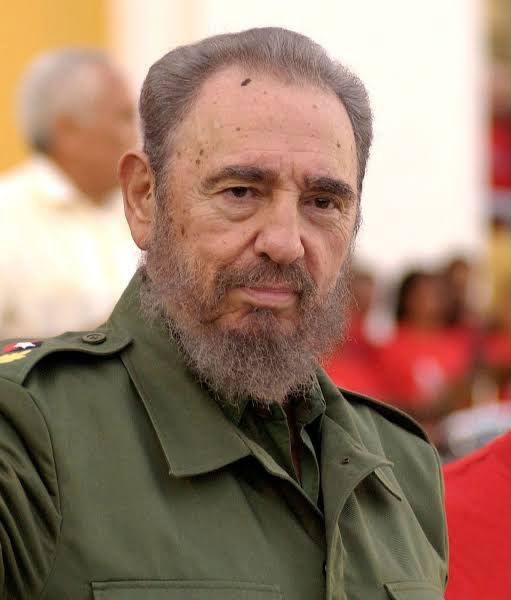
Castro died on 25 November 2016, aged 90, but his political presence did not disappear. In Cuba, he remains associated with literacy, public medicine, anti-racism and resistance to external domination. In India and much of the Global South, he is also remembered as a champion of non-alignment who treated the sovereignty of developing nations as a matter of principle rather than diplomatic convenience. Elsewhere, he remains a revolutionary who gave the language of liberation a distinctly international dimension. Even amid Cuba’s present crisis, many continue to regard him as a figure of dignity and moral purpose, while others blame the political system he created for the island’s long-term predicament.
The most fitting tribute to Fidel Castro is therefore not blind praise. It is recognition. He was a man who refused the modest ambitions assigned to small nations and poor people. He made Cuba a protagonist in world affairs, confronted the United States, inspired anticolonial movements and expanded social provision on an extraordinary scale. He also demonstrated how a revolution’s emancipatory promise can become constricted when power ceases to tolerate dissent.
At his centenary, Castro’s life compels both admiration and argument. History may not absolve everything he did, but it cannot ignore what he achieved. Fidel Castro was neither saint nor caricature. He was a revolutionary of immense courage, formidable political intelligence and troubling authoritarian instincts—a leader who made the world listen, and whose shadow still falls across Cuba, India, Latin America and the unfinished history of the twentieth century.

~Hasnain Naqvi is a former member of the history faculty at St. Xavier’s College, Mumbai….
The opinions expressed here are solely those of the author.

