

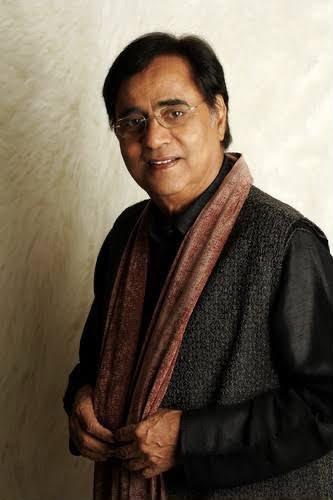
Fifteen years after the silence fell on 10 October 2011, the voice of Jagjit Singh continues to arrive unbidden in quiet rooms, on long drives, and in moments when the heart needs a companion who understands without demanding explanation. He did not merely sing ghazals; he restored their dignity in an age that had begun to treat them as museum pieces, and he did so with a restraint so complete that it felt like intimacy itself.
From the Dust of Sri Ganganagar to the Mehfils of Mumbai
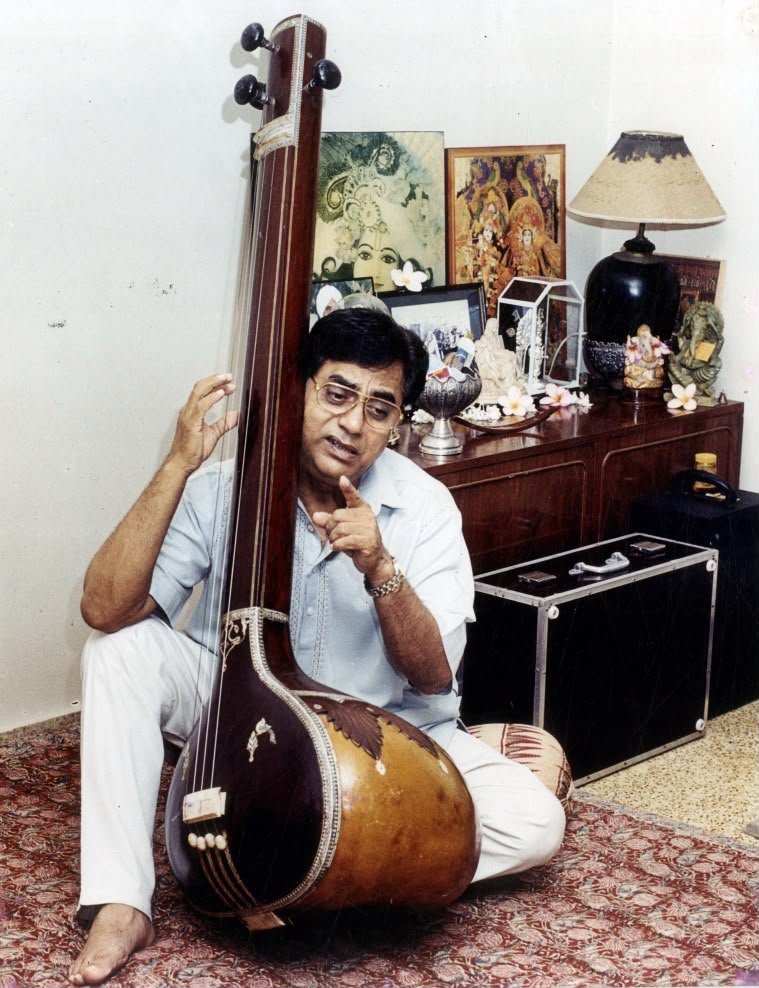
Born on 8 February 1941 in Sri Ganganagar, Rajasthan, into a Sikh family that hoped he would become an engineer, Jagjit Singh chose instead the harder path of the voice. He studied under Pandit Chagan Lal Sharma and later Ustad Jamal Khan of the Maihar gharana, absorbing khayal, dhrupad and thumri until the classical foundations were invisible yet unshakeable. By the early 1960s he was already broadcasting from All India Radio Jalandhar. In 1965 he arrived in Mumbai with little more than talent and stubbornness. The city would test both.
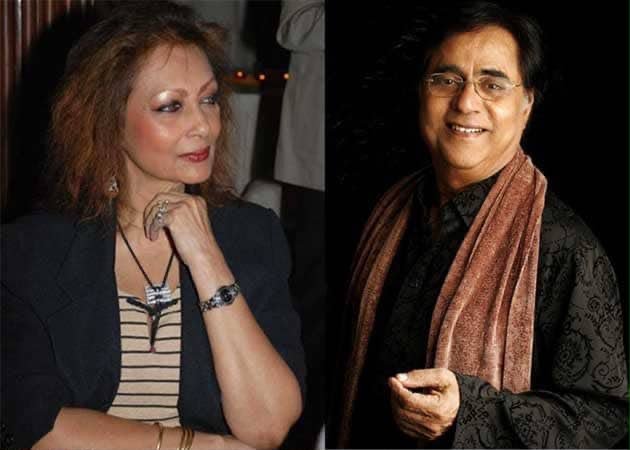
It was while recording a jingle in 1967 that he met Chitra Dutta. Their story unfolded with the same quiet determination that marked his music. He supported her and her daughter Monica, sought permission from her former husband, and married her in 1969. Their son Vivek was born into a household where music was both livelihood and language. Together they would reshape the sound of the modern ghazal.
The Unforgettables and the Democratisation of Desire
In 1975 HMV released The Unforgettable. The album announced a new grammar: sarangi and tabla conversing with Western instruments, classical discipline married to contemporary feeling. Baat niklegi to phir door talak jayegi– “Once the word is spoken, it will travel far” – was more than a couplet; it was a manifesto. Jagjit had decided that the ghazal need not remain the private property of connoisseurs. He would carry it into living rooms and make longing respectable again.
The following years brought Shiv Kumar Batalvi – Birha da Sultan, the Wembley concert, and then the cinema. In 1981, Hothon se chhoo lo tum mera geet amar kar do from Prem Geet became an anthem of romantic permanence. A year later, the twin soundtracks of “Saath Saath”and “Arth” turned Jagjit and Chitra into household names. He had sung Javed Akhtar’s lines without bargaining for fees, even covering studio costs himself. The cassettes sold as if people were buying not music but a private conversation with their own unfinished emotions.
The Masterpieces of Middle Age
The Latest (1984) gave the world Woh kagaz ki kashti, woh baarish ka paani– “That paper boat, that rainwater.” The image is fragile, almost childlike, yet the voice carries the weight of adult resignation. Ecstasies followed, and then, in 1987, Beyond Time, the first fully digital album by an Indian artist. Technology had caught up with a sensibility that had always been ahead of its time.
In 1988 he scored Gulzar’s television series Mirza Ghalib. The poet of undivided India found, in Jagjit’s measured delivery, a second life among a generation that might never have opened a diwan. When he sang Hazaaron khwahishen aisi ke har khwahish pe dam nikle– “A thousand desires such that each one takes the breath away” – the couplet no longer belonged only to the nineteenth century. It belonged to anyone who had ever wanted too much and received too little.
Grief, Return, and the Deepening of the Voice
On the night of 27 July 1990, while returning from a performance, Jagjit and Chitra witnessed a roadside accident. Hours later they learned it had claimed their son Vivek. The silence that followed was absolute. Chitra never returned to the stage. Jagjit returned after a year, beginning his comeback with the Punjabi folk song Mitti da bawa, a lullaby sung by a childless woman to a doll of clay. Audiences wept not only for the boy who was gone but for the father who had chosen to keep singing.
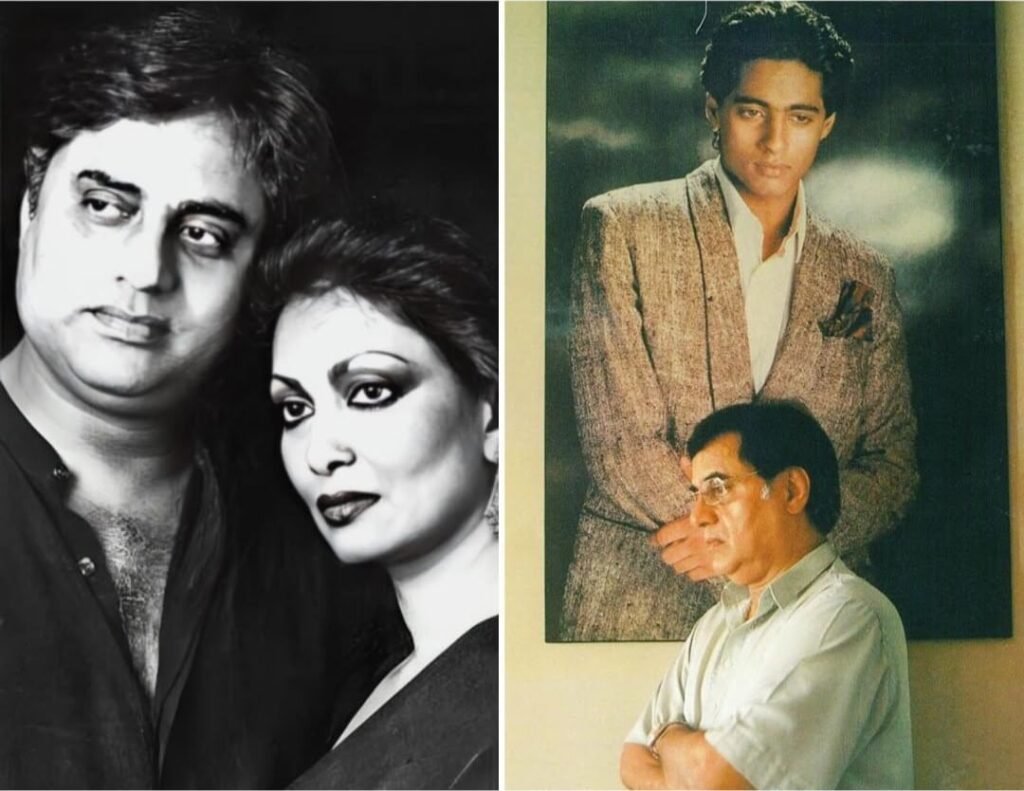
Thereafter the repertoire grew more philosophical. Metaphysical verses and bhajans – Hey Govinda Hey Gopala, Om Namah Shivay, Jai Radha Madhav – sat alongside the old ghazals. The pain never left the voice; it simply learned to speak in longer sentences. In 1998 the Sahitya Akademi recognised his work on Ghalib. In 2003 the nation conferred the Padma Bhushan. In 2006 came the Teacher’s Lifetime Achievement Award. None of these honours altered the essential quality of his singing: the sense that the listener was being addressed personally, almost confidentially.
Tragedy returned in 2009 with the suicide of Monica. Two years later, on the day he was to share a stage with Ghulam Ali, a brain haemorrhage ended the life of the man who had given so many others the language for their private sorrows.
The Enduring Gift
Jagjit Singh sang in Hindi, Urdu, Punjabi, Bengali and Gujarati. He collaborated with Lata Mangeshkar, Asha Bhosle, Gulzar and Javed Akhtar. He popularised Tum ko dekha to yeh khayal aaya– “When I saw you, this thought came” – and Tum itna jo muskura rahe ho– “You who are smiling so much” – until the lines became part of the common emotional vocabulary of the subcontinent. He made Koi fariyaad and Chithi na koi sandesh feel like letters one might have written oneself.
What he achieved was rarer than technical mastery. He restored to the ghazal its original function: the articulation of complicated feeling in a form simple enough to be shared. He never raised his voice to demand attention; he lowered it until attention became inevitable. In an industry that often confuses volume with intensity, his restraint remains radical.
Fifteen years after his departure, the recordings continue their quiet work. A young listener discovers Woh kagaz ki kashti?and suddenly understands that fragility can be a form of strength. An older listener returns to Hazaaron khwahishen aisi and finds the same consolation that once helped him survive a different decade. The voice has not aged. It has only become more necessary.
Jagjit Singh did not invent the ghazal. He simply reminded a hurried nation how to listen to its own heart. That reminder still travels, farther than any single baat, across the distance that death was supposed to create and somehow failed to.

~Hasnain Naqvi is a former member of the history faculty at St. Xavier’s College, Mumbai….
The opinions expressed here are solely those of the author.