

BioScience, in a report dated October 14, 2026, has warned that the rate of global warming appears to have accelerated—from about 0.05°C per decade between 1880 and 1970 to roughly 0.36°C per decade between 2010 and 2024. The 2°C threshold associated with irreversible global climate collapse could be crossed before 2050. Several climate-related indicators—such as greenhouse gas concentrations and tree-cover loss owing to wildfires—substantiate this alarm. Of the 16 planetary vital signs, seven—including sea level and atmospheric greenhouse gas concentrations—are currently at record extremes. The 2026 report presents evidence of mounting pressure on the atmosphere, oceans, ice sheets, and biosphere. Atmospheric concentrations of carbon dioxide, methane, and nitrous oxide all reached unprecedented record levels. Carbon dioxide exceeded 428 parts per million in May, approximately 50% above the pre-industrial level. The recent acceleration is attributed to changes in atmospheric aerosols, ocean circulation, and the behaviour of natural carbon sinks.
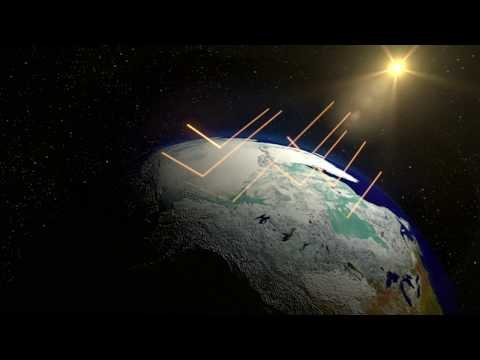
Earth’s energy imbalance is yet another critical factor. This imbalance measures the difference between the energy the planet absorbs from the sun and the energy it radiates back into space. When more energy enters than leaves, heat accumulates throughout the climate system. The consequences include warming oceans, rising sea levels, melting ice, and increasing pressure on ecosystems. The report highlights record-high ocean heat content and sea levels, alongside record-low glacier thickness and Greenland ice mass. It also underscores the growing incidence of wildfires and their debilitating effects on ecosystems. Global tree-cover loss due to fires reached 10.8 million hectares in 2025, the third-highest level on record. Fires release greenhouse gases, destroy ecosystems, and can further weaken natural carbon sinks. These factors are interconnected: forest degradation, rising temperatures, changing rainfall patterns, and weakening carbon sinks reinforce one another. The concern is not only that individual, isolated hazards are becoming more severe and frequent, but also that changes in one part of the planetary system may intensify pressures elsewhere.
The report identifies several possible feedbacks and tipping risks, including those involving the Amazon rainforest, the Atlantic Meridional Overturning Circulation (AMOC), ice sheets, and permafrost. The timing and likelihood of individual tipping events remain uncertain, but uncertainty is not a justification for inaction when the potential consequences are so alarming.
The State of the Climate annual report states that Earth’s life-support systems are being pushed beyond stable limits. Simone Shah, writing in Time on November 9, 2026, stated that in May atmospheric carbon dioxide rose to roughly 50% above pre-industrial levels and higher than at any time in the past 2 million years. Fossil-fuel consumption rose by 0.9% in 2025, with oil, coal, and gas all reaching record highs. She further asserts that there have been some signs of progress. Low-carbon sources provided roughly 43% of global electricity generation in 2025, and solar and wind energy consumption grew by about 18%. That progress occurred, of course, before the U.S.–Israel war on Iran. But cutting carbon emissions will no longer be enough on its own. The following measures must be taken urgently to reverse the process of destabilization. Effective responses will likely require coordinated progress in adaptation, mitigation, ecosystem protection, technological innovation, and social transformation.
Adaptation
The severe extreme weather events across the globe provide compelling evidence that mitigation alone is not enough. Rapid climate adaptation protects people and nature. Yet funding for climate adaptation is unevenly distributed and often routed through national governments, limiting access for local and frontline communities. In 2024, global climate adaptation finance was roughly $64 billion—far below the estimated $310–365 billion per year needed; by 2035, developing countries are projected to require that amount. According to a 2026 UNEP report, UNEP has assisted nearly 90 adaptation projects benefiting roughly 3.5 million people. However, the effectiveness of many adaptation strategies is expected to decline as warming intensifies, highlighting the need to pair adaptation efforts with rapid reductions in greenhouse gas emissions.
Mitigation
Climate mitigation may also be pursued alongside pressing development objectives, including expanding access to affordable and reliable energy. While mitigation reduces the causes of climate change, adaptation reduces exposure and vulnerability to its consequences. Therefore, both should go hand in hand.
Emerging Climate Interventions
Of late, developments in renewable energy, electrification, battery storage, and ecosystem restoration indicate positive social and technological tipping points. But more work needs to be done to reduce the environmental impacts of renewable energy infrastructure. Rapid declines in the cost of solar power, wind energy, batteries, and electric vehicles are helping accelerate the transition to low-carbon systems. Global investment in clean energy technologies has increased substantially in recent years, with growing deployment of renewable electricity, grid-scale energy storage, and electrified transportation. But incremental adjustments alone are not going to achieve the required scale of reduction in emissions.
It is heartening to note that signs of societal transformation are beginning to emerge. The Santa Marta Conference in Colombia marked an important milestone as the first-ever global summit dedicated exclusively to the practical phase-out of fossil fuels, establishing a new international precedent for transitioning away from coal, oil, and gas, with more than 50 participating nations and 24 formal signatory countries. Nonetheless, current progress remains far below what is needed to stabilize the climate system for future generations.
That is why the 2026 State of the Climate Report: Challenges and Opportunities states: “Earth’s climate system is moving deeper into uncharted territory.”

The writer holds a Master’s in Public Administration–Environmental Science and Policy from Columbia University, New York.