Why your next big break might be in an industry you weren’t even looking at
What my sister, actor Deviyani Sharma’s journey from Delhi to Tollywood, reveals about ambition, women playing villains, financial independence, the changing face of Indian cinema and the business of building an acting career.
1. The villain has entered the room. And she’s a woman.
What if the role that gets you noticed isn’t the heroine? What if the industry that gives you your breakthrough isn’t Bollywood? And what if the biggest mistake an aspiring actor makes is spending years trying to enter the same door as everyone else?
These questions feel particularly relevant today, as my younger sister, Deviyani Sharma, takes on an interesting antagonist role as Nila (Neela) in Trivikram Srinivas’s Aadarsha Kutumbam House No: 47 (AK47), starring Venkatesh Daggubati.

There is something refreshing about women who aren’t necessarily written to be loved, rescued or even understood. From Ramya Krishnan’s unforgettable Sivagami in Baahubali, Tabu’s chilling Simi in Andhadhun, Anasuya Bharadwaj’s Dakshayani in Pushpa to Varalaxmi Sarathkumar’s formidable performances in Telugu cinema, women have demonstrated that commanding the screen doesn’t always require playing the protagonist.
A well-written antagonist can offer an actor extraordinary psychological complexity, agency and dramatic range.
Perhaps we need to stop asking actresses whether they are playing the lead and start asking whether they have something worthwhile to perform.
And perhaps that is an important distinction for an industry that is gradually moving beyond the traditional heroine-versus-vamp vocabulary.
2. Delhi to Tollywood: Sometimes, the road less travelled is the smarter one.
I have watched Deviyani’s relationship with acting evolve over the years. Growing up in a family where creative expression was encouraged, she was exposed to theatre, performance and the rather unpredictable world of artists quite early.
I was involved in English theatre in Delhi, explored acting and dabbled in cross-cultural creative projects across English and Hindi. There were rehearsals, performances, auditions and the many little experiences that come with being drawn to the stage.
Watching me perform, and occasionally sharing the experience of acting alongside me, gave Deviyani an early window into that world. But what began as exposure and inspiration gradually became a much bigger personal ambition. She held on to that dream, pursued it and eventually chose to make it her profession.
Born and raised in Delhi, she moved to Hyderabad in 2019, entering an industry where the language, professional networks and cultural environment were largely unfamiliar. Her work has since included Bhanumathi & Ramakrishna, Romantic, Save the Tigers, Shaitan and now AK47.
In a 2023 Times of India interview, she spoke about her Delhi theatre background, moving to Hyderabad and becoming comfortable conversing in Telugu.
When asked why she chose Tollywood, her response was wonderfully uncomplicated: “Why not Tollywood?”
I love that question.
It wasn’t necessarily about abandoning one dream for another. It was about recognising that there was an entire professional ecosystem worth exploring.
And this is something aspiring actors should consider: sometimes changing your geography can be as important as changing your strategy.
3. Bollywood isn’t the only destination. It is just the most familiar one.
We have somehow conditioned ourselves to believe that making it in Mumbai is the ultimate validation of an acting career.

But let’s look at the market.
According to Ormax’s Box Office Report 2025, India’s theatrical box office generated approximately ₹13,395 crore in gross collections. Hindi cinema accounted for 41% of the market, while Telugu cinema contributed 18%. Tamil cinema accounted for another 13%, Malayalam 9% and Kannada 4%.
Collectively, these four South Indian language industries represented 44% of India’s theatrical box office.
These numbers don’t tell us how easy it is for a newcomer to get cast. But they do tell us that the opportunity landscape is considerably wider than the one we instinctively imagine.
The FICCI-EY 2026 report also valued India’s media and entertainment sector at ₹2.78 trillion in 2025, with digital media crossing the ₹1 trillion mark for the first time.
Cinema is no longer a single-format business. Films, OTT, regional storytelling and digital platforms have expanded the ways in which artists can build their careers.
So why should an actor limit their ambition to one language, one city or one casting ecosystem?
Mumbai may be home, but home doesn’t have to be the only marketplace.
4. One Indian film industry. Different gateways. Different rules.
The North-South conversation is often unnecessarily competitive. I don’t believe either industry needs to be diminished for the other to be appreciated.
Hindi cinema has its strengths, as do Telugu, Tamil, Malayalam and Kannada cinema. Each has its own audience relationships, production practices, storytelling traditions and professional networks.
Look at the crossovers.
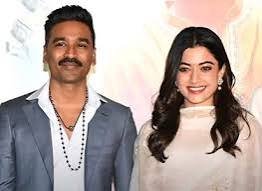
Rashmika Mandanna has moved between Kannada, Telugu and Hindi cinema. Dhanush and Vijay Sethupathi have explored Hindi-language projects. On the other side, actors such as Boman Irani and Paresh Rawal have ventured into South Indian productions.
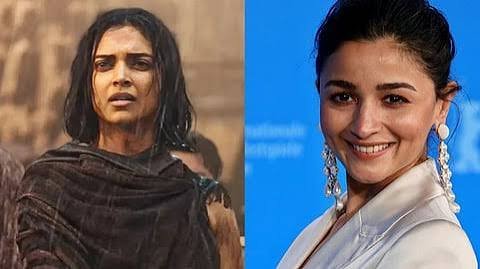
Alia Bhatt and Deepika Padukone have also been part of Telugu productions.
The exchange is happening, and audiences are increasingly comfortable with it.
But I do wonder whether the perception of these movements is always symmetrical. A South Indian star entering Bollywood is frequently celebrated as a pan-India expansion. A North Indian newcomer entering Telugu cinema can still be seen as taking an unconventional route.
There are practical reasons for these differences: language proficiency, casting relationships, market familiarity and the economics of production.
Yet perhaps we need to rethink our labels.
Cinema is an art form, not a geographical loyalty test. An actor’s ability to inhabit a character shouldn’t be restricted by their mother tongue.
And if audiences can embrace stories across languages, surely the talent pool should be allowed to travel just as freely.
5. Stop waiting to be discovered. Start building your acting career.
This is where I believe we need a fundamental mindset shift.
We often speak about acting as though it is a lottery. You wait for the right person to notice you, the right audition to come along, the right filmmaker to believe in you and the right opportunity to change everything.
Luck certainly plays a role. But why should it be the entire business model?
An actor pursuing a professional career is also an entrepreneur. Their talent is their core offering, their training is product development, their positioning is branding, their network is business development and their body of work is their portfolio.
Think about it.
Why shouldn’t actors research markets, understand casting requirements, develop language skills, diversify their genres, build professional relationships and invest in their own visibility?
Why shouldn’t they evaluate an opportunity based on what it adds to their career rather than simply how big the star attached to it is?
Deviyani herself articulated this beautifully in an October 2025 Times of India interview: “If you’re in a film with a big star cast but have nothing to do in it, that makes no sense because it’s not adding value.”
That is a business decision as much as it is an artistic one.
Build a portfolio, not just a dream. Every project should contribute something: experience, a new skill, a relationship, a stronger performance reel or an opportunity to explore a different side of yourself.
And remember, diversification doesn’t mean accepting every opportunity that comes your way. It means understanding which opportunities can take you closer to where you want to be.
6. The uncomfortable conversation about money: Artists need to make a living too.
There is another myth about the acting profession that deserves to be dismantled.
We tend to assume that actors are either rich, famous and living glamorous lives or struggling artists who have somehow romanticised having absolutely nothing.
The reality is considerably less cinematic.
For every established actor with a consistent flow of projects, there are hundreds of professionals navigating irregular payments, long gaps between assignments, uncertain casting decisions and the financial demands of staying relevant in an expensive industry.
And no, sleeping on floors, surviving on vada pav and living on peanuts shouldn’t be the badge of honour we hand out to newcomers.
That narrative has been done to death. Struggle may be part of someone’s story, but it should never become the recommended business model.
Shah Rukh Khan once offered a rather pragmatic perspective: “Don’t become a philosopher before you become rich.” His other remarks about financial stability carry a similar message: earn, become secure, but don’t compromise your principles in the process.
I think aspiring artists need to take this seriously.
Financial stability gives you the freedom to make better creative decisions. It allows you to turn down exploitative assignments, invest in your craft, travel for auditions, take calculated risks and sustain yourself through periods when work is scarce.
And if you aren’t from a film family with an established support system, you need to be particularly conscious of this.
One doesn’t have to abandon acting to earn a living. In fact, staying close to the entertainment ecosystem can be a very smart way of doing both.
Explore casting, production, writing, direction, voice work, theatre, creative development, advertising, content creation, acting workshops or other legitimate professional opportunities within the same ecosystem. Develop skills that allow you to earn while remaining connected to the industry you want to grow in.
This isn’t settling. It is building an ecosystem around your ambition.
There is absolutely no shame in having multiple professional identities while pursuing acting. Nor should a newcomer feel compelled to pretend that financial security is somehow less artistic than financial struggle.
The objective isn’t to become rich before becoming an actor. It is to avoid becoming financially vulnerable simply because you chose to be one.
Protect your livelihood so that you don’t have to compromise your passion to survive.
7. Nepotism, networks and the artist I am. The actor she chose to become.
Let’s not pretend that access doesn’t matter.
Being born into an established film family can mean introductions, industry familiarity, resources and opportunities that an outsider may have to work considerably harder to secure.
That is a reality worth acknowledging.
But access and longevity are not necessarily the same thing. An introduction might open a door, but the ability to sustain a career requires craft, discipline, adaptability and consistency.
Equally, telling newcomers that talent alone will overcome every barrier is unfair. Representation, professional guidance, financial stability and access to casting networks matter.
Interestingly, Deviyani spoke about this very challenge in her 2025 interview, pointing out that newcomers often lack managers and representation, while established names already have systems that help secure opportunities.
The solution isn’t to spend an entire career resenting the existence of established families. Nor is it to accept unequal access as inevitable.
It is to understand the ecosystem, build your own professional infrastructure and look for opportunities beyond the obvious circles.
Perhaps this is also where I see a difference between our individual journeys.
I have always been an artist in one form or another. Theatre, writing, acting, advertising, music, creative direction and storytelling have all been part of my life. I have experienced the thrill of inhabiting characters and the vulnerability of putting one’s creative self out there.
But I also chose to build a professional life across other disciplines.
Deviyani chose to pursue acting as her primary calling. Our shared experiences around theatre and performance were part of her formative years, but the years of persistence, the decisions, the risks and the journey that followed have been entirely her own.
I have watched her navigate different characters, deal with typecasting after Shaitan, explore different formats and now venture into a significant Telugu film production.
And that is what I find worth celebrating: not simply that she is in a film with an established star or filmmaker, but that she has continued to create a body of work across industries and formats.
There is a lesson here that extends beyond our family.
Not every artist has to follow the same path. Not every actor needs to become a household name to have a meaningful career. And not every professional milestone needs to be measured against someone else’s success.
What matters is whether you are consciously building towards the life you want.
Don’t chase the industry. Understand the industry.
Perhaps the biggest misconception about an acting career is that you must be discovered before you can begin building one.
You don’t.
You can learn. You can experiment. You can diversify. You can change cities, languages, genres and even your understanding of what success looks like.
You can acknowledge that the playing field isn’t always level without allowing that reality to become the ceiling of your ambition.
And perhaps the next big opportunity isn’t waiting in the city you moved to. It may be waiting in the market you never thought to explore.
As artists, we spend so much time waiting for someone to see our potential. Maybe it is time we learnt to recognise it, invest in it and build something with it ourselves.
Because talent deserves opportunity. But ambition deserves a strategy.

Sonam Sharma (popularly known as Zaffarah on social media ) is a creative entrepreneur, copywriter, artist and working across advertising, entertainment and media.