

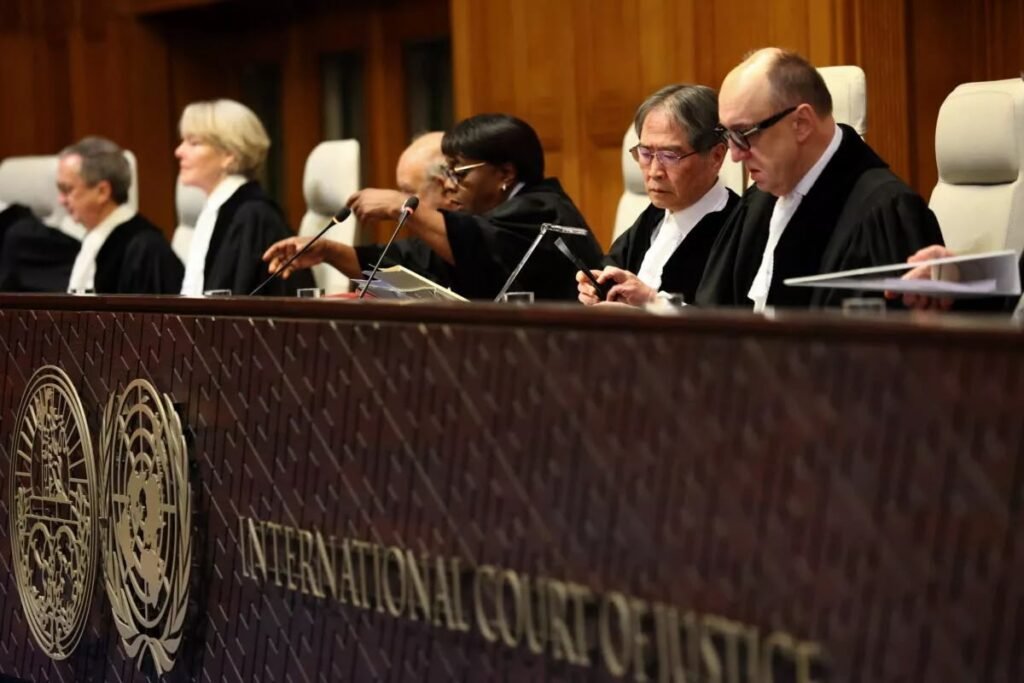
For nearly eight decades, the 1948 Convention on the Prevention and Punishment of the Crime of Genocide has served as the moral cornerstone of the postwar international order. Forged in the aftermath of the Holocaust and championed by the jurist Raphael Lemkin, the treaty carried a singular, uncompromising vow: “Never again.” Yet when the International Court of Justice (ICJ) in The Hague finally issued a historic ruling holding a state directly liable for genocide for the first time, that milestone of international law inadvertently exposed a deep geopolitical fault line.
The World Court’s landmark decision finding Myanmar guilty of committing genocide against the Rohingya Muslim minority represents a long-overdue reckoning for a persecuted population. At the same time, it casts a harsh light on the agonizing procedural paralysis surrounding the case of Gaza. While the court has demonstrated that its legal framework can evolve to confront state-sponsored atrocities, its slow, cautious, and politically constrained handling of the devastation in the Palestinian enclave threatens to hollow out the very treaty it is charged with defending.
A Moral Bedrock Weighed Down by Realpolitik
When the United Nations General Assembly adopted the Genocide Convention on December 9, 1948, it defined the “crime of crimes” not simply by the scale of bloodshed, but by dolus specialis—the specific intent to destroy, in whole or in part, a national, ethnical, racial, or religious group. Crucially, the treaty looked beyond punishing atrocities after the fact; under Article I, all contracting states bound themselves to actively prevent genocide.
For generations, however, Cold War rivalries and the shield of state sovereignty kept the Convention largely dormant. Only in the 1990s, amid the horrors in Rwanda and the former Yugoslavia, did international tribunals begin translating Lemkin’s vision into enforceable law. Those ad hoc criminal courts successfully convicted individual architects of mass slaughter—military commanders, political leaders, and propagandists.
Holding an entire state accountable at the ICJ, however, proved far harder. In its 2007 judgment on the Bosnian war, the court erected an extraordinarily steep evidentiary barrier. Although it recognized the 1995 Srebrenica massacre as genocide, it absolved Serbia of direct state responsibility, holding that genocidal intent could be inferred from a pattern of conduct only if it were the sole plausible explanation for a government’s actions. In practice, that standard allowed accused states to insulate themselves behind claims of conventional warfare, counterinsurgency, or self-defense, leaving the state-accountability mechanism of the 1948 Convention virtually toothless.
How the Myanmar Verdict Lowered the Evidentiary Wall
That legal barrier finally gave way in the ICJ’s ruling in The Gambia v. Myanmar. Examining the Tatmadaw’s brutal 2016–2017 “clearance operations” in northern Rakhine State—campaigns that killed thousands, subjected women and girls to systematic sexual violence, burned hundreds of villages, and forced more than 700,000 Rohingya to flee into neighbouring Bangladesh—a nine-to-six majority of judges reached a watershed verdict: Myanmar had committed genocide, and had failed to prevent or punish it.
To arrive at that ruling, the court fundamentally reshaped how genocidal intent is established. Without a “smoking gun” directive explicitly ordering extermination, the judges evaluated the totality of the record: the systematic pattern of atrocities, the targeted nature of the assaults against the Rohingya, the destruction of the community’s social and reproductive foundations, and a pervasive climate of state-sponsored dehumanization. Most importantly, the court dismantled Myanmar’s claim that its forces were merely conducting counter-terrorism operations against insurgents. Multiple motives, the judges concluded, can coexist; a government’s aim to crush a rebellion or forcibly expel a population does not rule out a concurrent intent to destroy that group.
The Gaza Double Standard: Procedural Drift and Geopolitical Shields
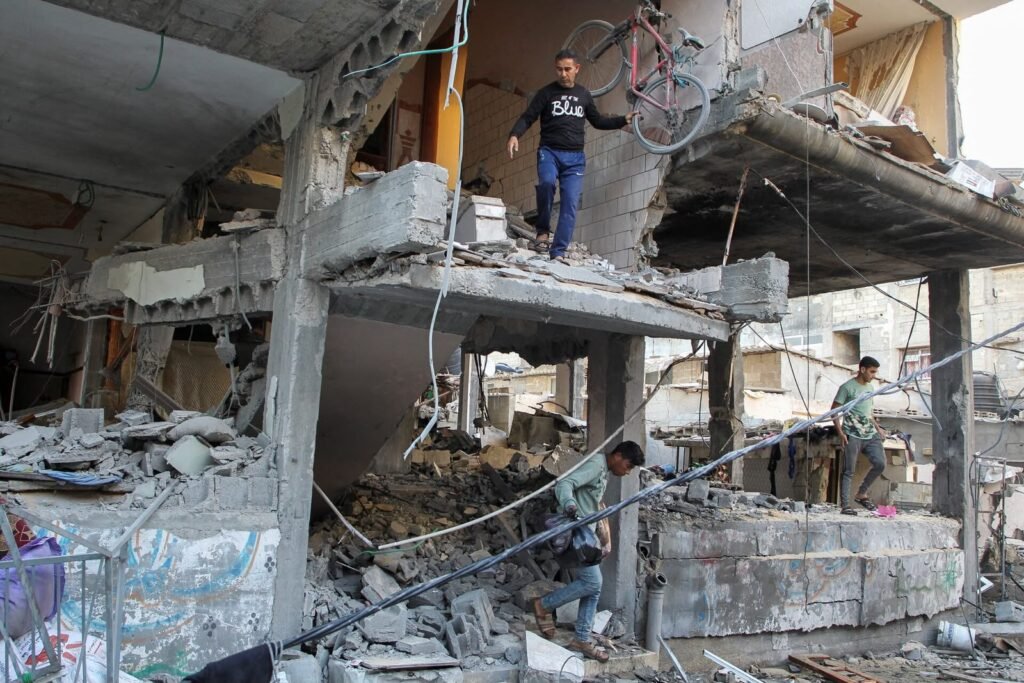
On paper, the legal blueprint established in the Myanmar judgment carries immediate, far-reaching consequences for South Africa v. Israel, the case addressing the destruction of Gaza. Every analytical pillar used to hold Myanmar accountable—the scale of civilian devastation, the obliteration of essential infrastructure, the imposition of conditions calculated to bring about physical destruction, and a backdrop of dehumanizing rhetoric from state officials—parallels the central arguments brought before the court regarding Gaza.
In practice, however, the Genocide Convention is being applied to Gaza with neither the urgency nor the clarity its authors envisioned. Instead, the proceedings have become trapped in procedural inertia and geopolitical double standards.
First is the tyranny of the judicial calendar. Although the ICJ issued three rounds of binding provisional measures in 2024 directing Israel to prevent genocidal acts and allow unhindered humanitarian relief, the court has allowed the core merits of the case to drift years into the future. With written pleadings scheduled to continue until at least May 2029, a final judgment is unlikely before the next decade. For a population already enduring tens of thousands of deaths, mass displacement, and severe starvation, a verdict delivered seven or eight years after the devastation is an autopsy, not an intervention.
Second is the diplomatic shield enjoyed by powerful Western allies. Myanmar’s military junta was an isolated pariah; eleven nations, including major Western powers, eagerly intervened in The Gambia’s case to press for a broad, victim-centered interpretation of the Genocide Convention. In the Gaza proceedings, many of those very same governments have armed the accused state, protected it diplomatically, or intervened before the court to advocate a narrower, far more restrictive threshold for genocidal intent. When the legal duty to prevent genocide collides with strategic alliances, geopolitical loyalty consistently overrides treaty commitments.
Finally, the “counterinsurgency” defense—so thoroughly rejected by the ICJ in Rakhine State—remains a potent diplomatic shield in Gaza. Notwithstanding the Myanmar ruling’s clear principle that military campaigns against armed militants cannot justify dismantling the conditions necessary for a civilian population to survive, major powers remain unwilling to apply that same legal standard to Israeli military operations against Hamas.
Universal Law or Empty Monument
The 1948 Genocide Convention was never intended to serve as a selective tool—applied decisively against isolated regimes in the Global South while moving in slow motion when Western-backed militaries stand accused.
By finally holding Myanmar liable, the International Court of Justice demonstrated that international law can pierce the veil of state sovereignty and name mass atrocity without equivocation. Yet until the international community and its highest court bring that identical standard, urgency, and political courage to bear on Gaza, the promise of 1948 will remain broken. International law cannot survive on selective enforcement; either the Genocide Convention protects all peoples equally, or it risks becoming a monument to the very hypocrisy it was forged to end.

~Hasnain Naqvi is a former member of the history faculty at St. Xavier’s College, Mumbai….
The opinions expressed here are solely those of the author.