

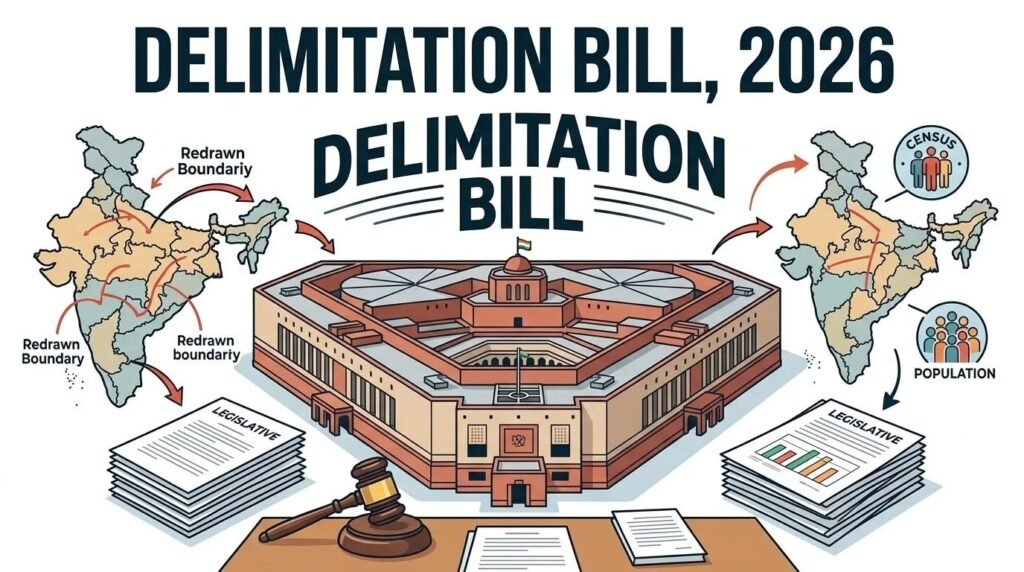
The Union Cabinet’s clearance of an amended delimitation package on November 27, 2026, has thrust one of the most consequential constitutional questions of the decade back into the centre of national politics. With a special sitting of Parliament scheduled from November 30 to December 3, the BJP-led NDA government is making a second, carefully recalibrated attempt to expand the Lok Sabha to around 850 seats, accelerate the implementation of one-third reservation for women, and lock the inter-state distribution of seats for another quarter-century. The proposal seeks a uniform 50 per cent increase in seats for every state, extends the freeze on the 1971 Census-based proportional allocation until 2051, and uses the 2011 Census only for redrawing constituency boundaries within states.
This is no routine administrative exercise. It is an attempt to reconcile the democratic imperative of “one person, one vote” with the federal reality of a Union of states that have followed sharply divergent demographic paths. The outcome will shape not only the arithmetic of the 2029 general election but the long-term balance of power between North and South, large and small states, and the Centre and the periphery.
The Democratic Case for Expansion
India’s population has nearly tripled since the 1971 Census that still governs the inter-state allocation of Lok Sabha seats. The average number of people represented by each MP has risen dramatically, and the disparity across states has become stark. An MP from a high-growth northern state now represents far more citizens than one from a southern state that achieved early demographic transition. Article 81 of the Constitution envisages, as far as practicable, a broadly uniform population-to-seat ratio. Continuing with the 1971 freeze indefinitely would progressively dilute the value of the vote in the more populous states and undermine the principle of equal representation.
Expanding the House by a uniform 50 per cent addresses this imbalance without immediately stripping seats from any state. Every state gains absolute numbers. The larger House also makes the simultaneous introduction of 33 per cent women’s reservation far less disruptive; existing male incumbents need not be displaced en masse. Proponents argue that a bigger Lok Sabha will bring representatives closer to citizens, improve legislative capacity, and correct a decades-old anomaly that has left some constituencies grossly oversized.
The Federal Anxiety
The counter-argument is equally powerful and rooted in the Constitution’s character as a holding-together federation rather than a pure majoritarian democracy. Southern states—Tamil Nadu, Kerala, Karnataka, Andhra Pradesh and Telangana—successfully pursued the national goals of education, healthcare and family planning. Their total fertility rates fell well below replacement level while several northern states continued to record higher growth. A pure population-based reallocation after the post-2026 Census would have transferred a significant number of seats northward, reducing the relative political weight of the South. Tamil Nadu, for instance, faced the prospect of losing several seats in absolute terms under earlier projections.
By opting for a uniform percentage increase and freezing the 1971 proportions until 2051, the amended bill seeks to neutralise this fear. No state loses its existing share; every state gains proportionally. The formula echoes the pragmatic compromise adopted by the Vajpayee government in the 84th Constitutional Amendment of 2001, which permitted internal redrawing of boundaries while protecting inter-state shares. For southern political parties, the revised proposal removes the most immediate threat of relative disenfranchisement and may make the package more palatable than the version defeated in April 2026.
Yet absolute numbers still matter. Even under proportional expansion, the gap between the largest northern states and the southern ones widens in raw seat count. Uttar Pradesh’s strength grows more in absolute terms than Kerala’s. Over time, this can translate into greater bargaining power in coalition arithmetic, committee strength and the formation of governments. Smaller northeastern and Himalayan states, already thinly represented, remain marginal in a House that expands around the existing population-weighted structure.
Political Ramifications and the Numbers Game
The April 2026 attempt failed because the Constitution (131st Amendment) Bill could not secure the required two-thirds majority in the Lok Sabha. The government fell short despite a marathon debate. Since then, the political arithmetic has shifted through defections, realignments and the possibility of issue-based support from regional parties. The NDA is reportedly closer to the threshold, though still dependent on additional votes. Parties such as the DMK have publicly reiterated that Tamil Nadu’s share must be protected and that there can be no compromise on the principle of fair delimitation. Other regional formations are weighing the benefits of early women’s reservation against residual federal concerns.
Linking delimitation to women’s reservation is politically shrewd. The latter enjoys broad public and cross-party support in principle. By making the expansion of the House the vehicle for implementing the quota before the 2029 elections, the government frames opposition as obstruction of women’s empowerment. Critics counter that the two issues should be delinked: reservation can be implemented within the existing House strength, and a more thorough, census-based delimitation can wait until after the first census following 2026, as originally envisaged. They also warn that boundary redrawing, even if confined within states, opens the door to charges of gerrymandering that could favour the ruling dispensation in key regions.
The special sitting itself—convened more than 100 days after the monsoon session was adjourned without prorogation—has become a political flashpoint. The Opposition sees it as an attempt to capitalise on a temporarily favourable numbers situation rather than a genuine search for consensus. The absence of an all-party meeting on the revised formula has reinforced suspicions of unilateralism.
Impact on the Federal Structure
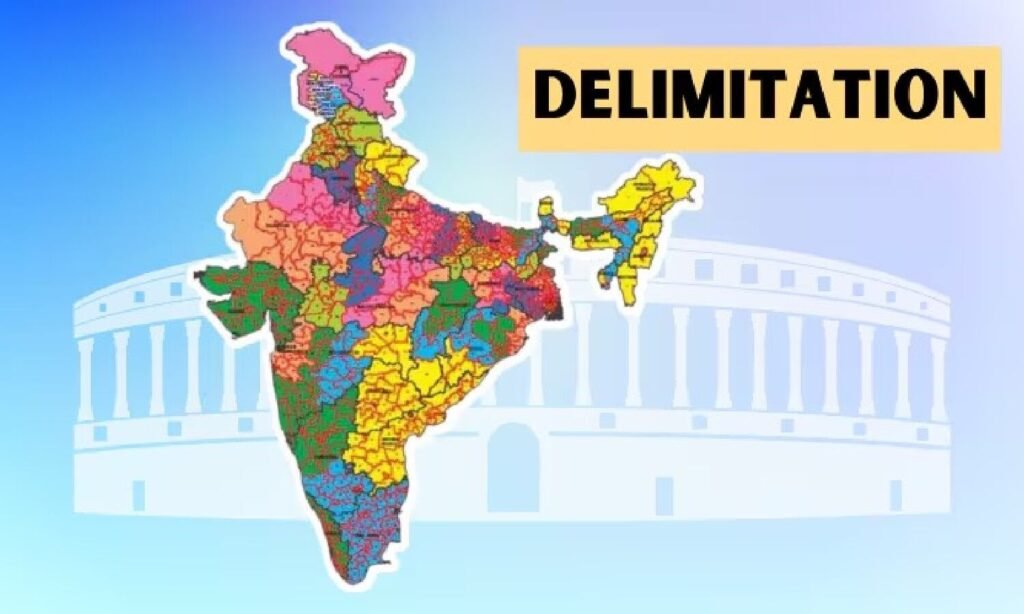
At its core, the delimitation debate is a test of whether India remains a federation of states with distinct identities and negotiated power-sharing, or whether demographic weight increasingly dictates political influence. A pure population principle privileges the democratic individual; a prolonged freeze privileges the state as a political unit. The amended bill tries to straddle both by expanding the House while freezing relative shares. This may buy time and reduce immediate regional tension, but it does not resolve the deeper structural problem.
A permanently larger Lok Sabha without corresponding reform of the Rajya Sabha risks further tilting the balance towards the popular chamber. The Council of States already operates on a population-weighted rather than equal-state basis. Expanding the lower house without strengthening the upper house’s federal character could weaken the institutional checks that protect smaller and demographically stable states. Fiscal federalism is also implicated: changes in parliamentary weight often influence bargaining over resource transfers, even if the Finance Commission formula is formally independent.
Moreover, the 25-year freeze until 2051 merely postpones the reckoning. Demographic divergence is unlikely to reverse dramatically in that period. When the freeze eventually ends, the same North-South and large-small tensions will resurface, potentially in a more polarised political climate.
A Pragmatic Compromise or a Deferred Crisis?
The current proposal is politically astute. It addresses the most visceral southern fears, advances a popular social reform, and expands representation without immediately zero-sum redistribution. In a diverse continental polity, such pragmatic compromises have historically preserved national unity. The 42nd and 84th Amendments themselves were products of similar calculations.
Yet constitutional durability requires more than short-term political management. A durable settlement would need broader consultation, transparent criteria for boundary redrawing, and perhaps complementary reforms—such as strengthening the Rajya Sabha’s federal role or introducing elements of degressive proportionality that protect smaller states without freezing the system indefinitely. Without these, the expansion risks being perceived in parts of the country as a demographic transfer of power dressed up as democratic modernisation.
As Parliament prepares to debate the amended package, the real question is not merely whether the numbers add up for a two-thirds majority. It is whether the Indian political system can design a formula that honours both the equal worth of every citizen and the equal dignity of every state. The answer will shape the character of Indian federalism for a generation.

~Hasnain Naqvi is a former member of the history faculty at St. Xavier’s College, Mumbai….
The opinions expressed here are solely those of the author.