
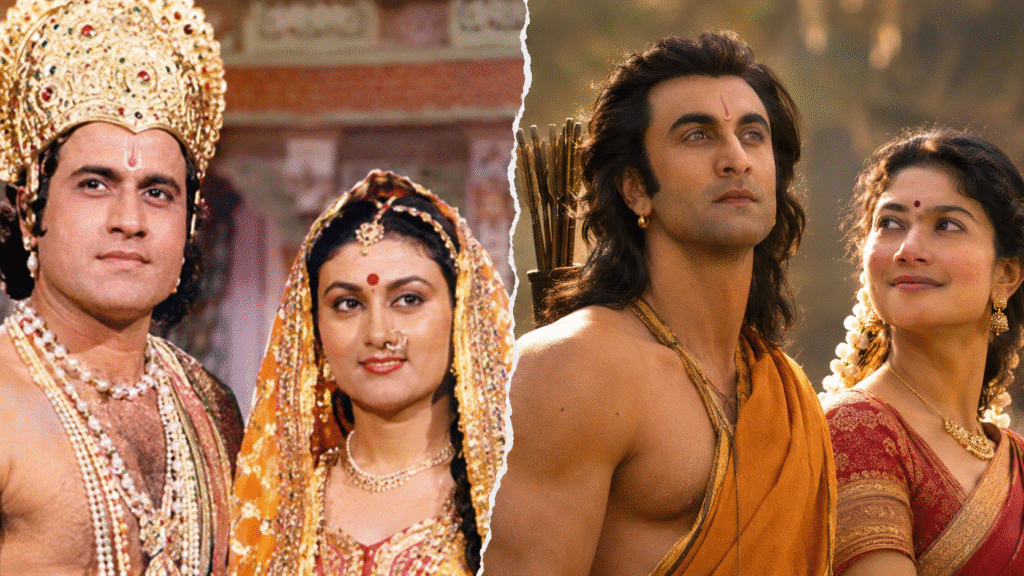
A Critical Review of Box-Office Optics, Narrative Disconnect, Westernized Visuals, and Forgotten Music
| Core Verdict Despite boasting a reported ₹4,000 crore two-part budget, cutting-edge VFX, and massive headline box-office numbers, Ramayana: Part 1 struggles to ignite genuine cultural devotion in North India. Unlike Ramanand Sagar’s 1987 television classic—which united the entire nation with modest effects through pure emotion, rooted storytelling, and unforgettable music—the modern big-screen spectacle mistakes technical grandeur for spiritual soul. |
1. The Box-Office Illusion vs. Ground Reality in North India
On paper, Ramayana: Part 1 projects historic commercial momentum, posting headline figures exceeding ₹700 crore net within its second weekend. Yet on the ground in major North Indian centres like Delhi-NCR, theatres tell a vastly different story. Morning and late-night screenings (such as 10:00 AM and 10:00 PM shows) routinely run at barely 25% occupancy, with overall daily averages hovering around 45%–50% rather than housefull boards.
- Inflated Accounting & Non-Ticket Add-Ons: Trade analysts have flagged that reported gross and net totals frequently fold in non-ticket charges—most notably 3D glasses fees—alongside discrepancies between multi-language net and gross accounting.
- Block Bookings & Seat Locking: Significant gaps appear on ticketing platforms between actual organic walk-ins and ‘blocked’ seats reserved for corporate quotas or bulk deals, artificially inflating advance booking trackers by nearly 25%–30%.
- Wide Screen Count & Premium Ticket Pricing: Playing across more than 23,500 daily shows nationwide at steep IMAX, 4DX, and 3D metro prices (₹450–₹500+ per ticket), even half-empty Delhi multiplexes generate substantial revenue—masking weak footfalls and lukewarm word-of-mouth in the Hindi belt.
2. Patchy Screenplay and Lack of Emotional Connect
The single biggest reason North Indian audiences remain unmoved is the absence of emotional resonance. Instead of weaving an organic, deeply felt human and spiritual drama, the screenplay plays out like a disjointed string of famous anecdotes.
- Episodic Checklist Over Narrative Flow: The film rushes through iconic milestones without building the emotional stakes behind them. Intimate bonds—such as Rama’s relationship with Kaushalya, Urmila’s quiet sacrifice, or Ayodhya’s heartbreak at the exile—are skimmed over on the assumption that audiences already know the story.
- Under-Sketched Protagonists: By dedicating disproportionate runtime to humanizing and glorifying Ravana, the narrative leaves Rama and Sita overly restrained and underwritten, depriving viewers of the warmth, vulnerability, and moral grace that anchor the epic.
- Spectacle Over Storytelling: Direction consistently yields to visual effects. Key emotional turning points feel sanitized and clinical, leaving viewers impressed by the scale yet emotionally detached when walking out of the cinema.
3. Alien, Westernized Visuals Disconnected from Indian Mythology
Designed with an eye toward Western crossover appeal, the film’s aesthetic borrows heavily from Hollywood high-fantasy franchises like The Lord of the Rings and Dune rather than classical Indian art, sculpture, and sacred geography.
- British Fantasy Giants Instead of Rakshasas: Rather than portraying Asuras and Rakshasas as formidable, culturally distinct beings with royal regalia and mystical power, the creature designs resemble generic Tolkien-style Orcs and brutish European giants smeared in ash.
- Panchavati as a Modern Boutique Spa Village: Instead of a raw, hand-woven forest hermitage (parnakuti) built from reeds, bark, and uneven earth during harsh exile, the Panchavati dwelling looks like a manicured 19th- or 20th-century mud-hut resort or wellness spa village bathed in studio mood lighting.
- Runway Couture & Machine-Finished Jewellery: Replacing timeless unstitched classical drapes (antariya and uttariya) with tightly tailored silhouettes and stitched modern blouses strips the characters of Treta Yuga authenticity. Similarly, the symmetrical, machine-crafted jewellery resembles a contemporary bridal trousseau rather than ancient divine adornments.
4. The Pushpak Vimana and Sita Haran: When Machinery Eclipses Tragedy
Nowhere is the triumph of engineering over emotion more glaring than in the Sita Haran climax. Instead of a celestial chariot driven by mantra and divine energy, the Pushpak Vimana is rendered as a massive, gear-heavy 18th- or 19th-century steampunk airship.
Because years of VFX development went into designing and iterating the flying vessel, the entire sequence is staged to show off the ship’s scale and mechanics. As a result, Sita’s terror and abduction—the moral turning point of the Ramayana—are overshadowed by aerial camera sweeps, while Jatayu’s noble sacrifice is reduced to a lacklustre CGI skirmish against a giant warship.
5. Forgotten Music That Fails to Stir Devotion
In Indian cinema and mythological storytelling, music is the primary vehicle of emotional memory. Here, despite high-profile international sound design, the soundtrack completely fails to connect.
- No Hummable Melodies or Soulful Themes: The background score leans on generic, thunderous orchestral swells suited to Western action trailers rather than Indian ragas or devotional lyricism. Viewers leave the auditorium without a single melody lingering in their minds—the music is forgotten even while the film is still running.
- Zero Emotional Bonding: Without soulful bhajans, chaupais, or deeply rooted lyrical themes to bind scenes together, moments of separation, devotion, and valour pass without giving audiences goosebumps.
6. Why Ramanand Sagar’s ‘Poor Cousin’ Still Rules the Nation’s Heart
Comparing Nitesh Tiwari’s ₹4,000 crore spectacle with Ramanand Sagar’s 1987 Doordarshan series reveals why technology can never substitute for conviction:
| Dimension | Ramanand Sagar’s Ramayana (1987) | Nitesh Tiwari’s Ramayana: Part 1 (2026) |
| Storytelling & Pacing | Unrushed, cohesive emotional arc that honours every relationship and moral nuance. | Patchy, episodic string of anecdotes rushed to showcase visual set pieces. |
| Visuals & World-Building | Modest sets and basic chroma effects, yet deeply rooted in Indian iconography and warmth. | Expensive DNEG VFX that feels alien—Western Orcs, steampunk ships, and spa-like huts. |
| Costumes & Styling | Traditional draped attire and classic ornaments that evoked immediate divinity. | Tailored couture silhouettes and modern bridal jewellery that feel contemporary. |
| Music & Soul | Ravindra Jain’s timeless chaupais and melodies that brought households to tears. | Forgettable, Western-style background score with zero hummable or devotional tracks. |
| Cultural Impact | Emptied streets across India; united every household in shared reverence. | Generates inflated trade posters, yet leaves North Indian theatres half-empty and cold. |
Conclusion Ramanand Sagar’s Ramayana proved that when storytelling is anchored in devotion, emotional truth, and culturally authentic music, audiences gladly forgive primitive special effects. Conversely, Nitesh Tiwari’s Ramayana demonstrates that no amount of box-office engineering, couture styling, or westernized CGI can compensate when a film loses touch with the spiritual soul and emotional heartbeat of the epic it seeks to tell.

Umakant Lakhera is a Senior Journalist and Political Commentator