
NEW DELHI: New Delhi has clinched a uranium supply agreement with Canberra during Prime Minister Narendra Modi’s visit to Australia, a move that is seen as a crucial step in India’s nuclear energy ambitions. India faces an almost-insatiable appetite for electricity as the world’s most populous nation, and Australia has the world’s largest known uranium resources that it doesn’t use. But legal hurdles and political sensitivities have hindered the trade so far.
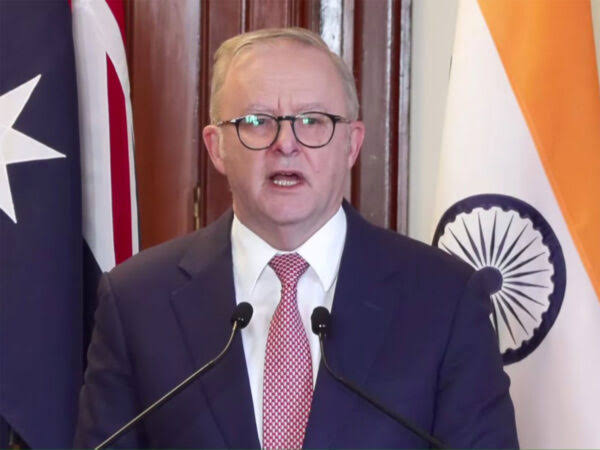
“We have signed an important agreement today on nuclear energy,” PM Modi said after talks with his Australian counterpart Anthony Albanese.
“This will pave the way for uranium supplies from Australia to India and give our clean energy objectives fresh momentum.”
The joint statement released by both nations highlighted that the arrangement allowed long-term uranium exports for “exclusively peaceful purposes” under the safeguards established by the International Atomic Energy Agency.
“The arrangement facilitates Australian uranium exports to India, to help increase the share of non-fossil fuel power capacity,” Albanese told reporters.
Australia has around 28 per cent of the world’s uranium resources, but it doesn’t use any nuclear power or weapons, and exports all of it. On the other hand, India, with a population of 1.4 billion, wants to install 100 gigawatts of nuclear power by 2047 to power 60 million Indian homes.
In the last decade, India has doubled the amount of nuclear power installed in the country, but it still makes up just 3 per cent of its electricity, as obtaining uranium hasn’t been simple. Australia, a signatory to the Nuclear Non-Proliferation Treaty, which recognises just the United States, China, Britain, France, and Russia as nuclear weapons powers, refuses to sell uranium to non-signatories like nuclear-powered nations like India.
India calls the treaty discriminatory, as it recognises countries that tested nuclear devices before January 1967 as the only legitimate nuclear weapon states. The clause disqualifies India as a nuclear state as it carried out its first nuclear test only in 1974. New Delhi was hit with international technology sanctions and uranium trade bans after it conducted nuclear tests in 1998.
Things changed in 2008, when the Nuclear Suppliers Group of countries, which includes the US, granted a waiver allowing India to buy uranium from its members. Since then, New Delhi has pursued bilateral pacts to permit sales of the material, including a deal with Canada in March.
India and Australia have grown considerably closer in recent years, partly driven by a joint desire to keep Beijing’s military ambitions in check while cultivating trading partners outside China. Canberra’s position also eased over time. Under the 2015 deal, it agreed to allow exports, subject to International Atomic Energy Agency Safeguards and “separation of the Indian civilian and military nuclear programs.” Thursday’s administrative agreement removed the obstacles to enacting the earlier deal.
PM Modi and Albanese also agreed to strengthen defence cooperation and to bolster supply chains for critical minerals. The two nations would build a “temporary space tracking terminal” on Australia’s Cocos Keeling Islands in the Indian Ocean, which will support Indian space flight projects, according to a joint statement.
The deal comes just days after Australia criticised China for test-firing a long-range ballistic missile from one of its nuclear-powered submarines into the South Pacific Ocean, an area protected by an anti-nuclear treaty.
Neither India nor Australia mentioned China in their announcement of bolstering the strategic ties.

We are a multimedia news network. Website : www.7xnews.com Based in New Delhi (India)
Youtube : umakantlakheraspeaks@gmail.com