

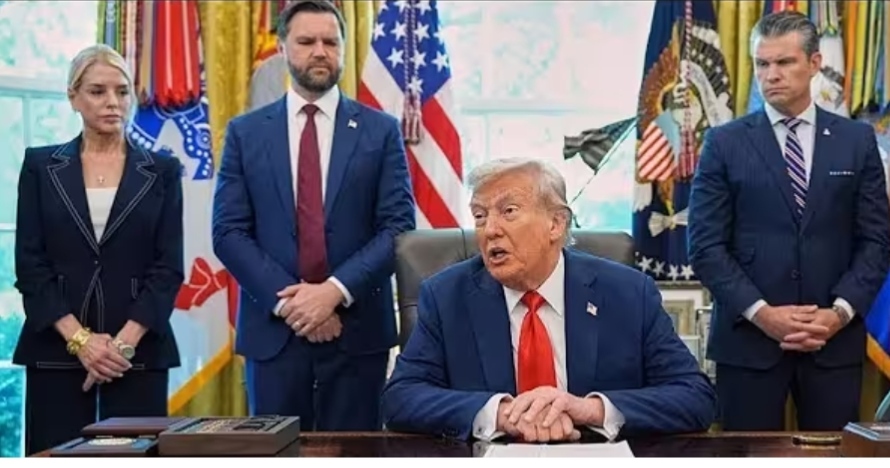
In the volatile theatre of West Asian geopolitics, words are rarely just words. They are signals, threats, bargaining chips—and sometimes, dangerous illusions. In recent weeks, Donald Trump has turned the escalating tensions with Iran into a spectacle of shifting ultimatums, public bravado, and private recalibration. The result is not strategic clarity but a deeply unsettling pattern of contradiction that risks miscalculation in one of the world’s most sensitive chokepoints: the Strait of Hormuz.
At the heart of the current crisis lies a curious duality. On his social media platform, *Truth Social*, and in televised remarks, Trump has issued repeated warnings that Iran faces imminent devastation if it fails to comply with American demands—ranging from reopening maritime routes to curbing its regional military posture. Phrases such as “hell will rain down” and assertions that the United States could “finish the job” within weeks have been amplified across global media, including *CNN*, *BBC*, and *The New York Times*.
Yet, behind this rhetoric of urgency lies a quieter, more pragmatic reality. Reports from *The Wall Street Journal*, *Financial Times*, and *The Washington Post* indicate that Washington has repeatedly softened its stance in back-channel communications. Deadlines initially framed as immovable have been extended—sometimes by days, sometimes by weeks—often following signals from Tehran that it is open to negotiations. Trump himself acknowledged in an interview that he expanded a proposed timeline after Iranian interlocutors requested more time.
This dissonance between public posture and private negotiation is not new in diplomacy. What is striking, however, is the theatricality with which deadlines are announced, only to be deferred without explanation. Analysts cited in *The Economist* and *The Guardian* describe this as a high-risk strategy of “coercive ambiguity”—one that attempts to maximize pressure while preserving room for retreat. But in a region already on edge, ambiguity can quickly spiral into misinterpretation.
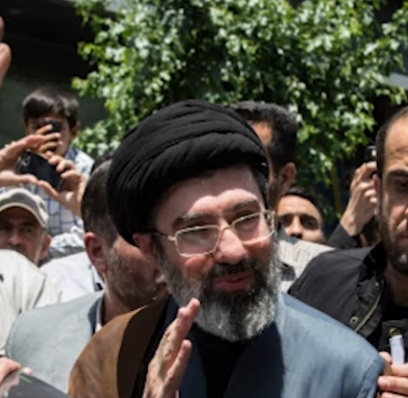
Iran’s response has been equally calibrated. Statements from *Press TV*,and the official channels of the Iranian Ministry of Foreign Affairs suggest a willingness to engage in talks, provided there is a cessation of hostilities. Tehran has framed its actions in the Strait as “defensive,” while indicating that maritime security could be restored if U.S. military pressure subsides. Independent reporting, including from regional outlets such as *Tehseen News*, corroborates the existence of indirect negotiations mediated through third parties.
The Strait of Hormuz, through which nearly a fifth of the world’s oil supply passes, has thus become more than a geographic flashpoint—it is now a symbolic clock, repeatedly reset. Each American ultimatum raises fears of imminent escalation; each quiet extension reveals the limits of that brinkmanship. The global economic stakes are enormous. Even the perception of instability in the Strait has historically triggered spikes in oil prices and rattled financial markets, a point underscored in analyses by the *Financial Times* and *The Economist*.
What emerges is a pattern that raises serious questions about credibility. Diplomacy depends not only on leverage but on trust—on the belief that stated positions, even if harsh, carry some consistency. When deadlines are repeatedly moved, threats begin to lose their deterrent value. Worse, they risk normalizing the language of catastrophic violence as a routine negotiating tactic.
This is where the current approach becomes particularly troubling. By invoking the spectre of large-scale destruction while simultaneously engaging in quiet de-escalation, the U.S. administration appears to be speaking in two voices. One is aimed at domestic audiences and political constituencies, projecting strength and decisiveness. The other is directed at diplomatic interlocutors, acknowledging the catastrophic costs of open conflict and the necessity of compromise.
Such dual messaging may yield short-term tactical gains, but it carries long-term strategic costs. As noted by commentators in *The Washington Post* and *The Guardian*, allies may find it difficult to align with a policy that seems to oscillate between maximalist threats and incremental retreats. Adversaries, meanwhile, may test the limits of American resolve, calculating that deadlines are flexible and red lines negotiable.
The risks are not merely theoretical. In a region where military assets operate in close proximity and where communication channels are often indirect, misreading intent can have immediate consequences. A naval incident in the Strait, a misinterpreted signal, or an overreaction to rhetorical escalation could trigger a chain of events that neither side fully controls.
There is also a deeper, more insidious consequence: the erosion of norms around the discourse of war. When the language of annihilation becomes a recurring feature of political communication—broadcast, amplified, and then quietly walked back—it desensitizes publics to the gravity of such threats. War, in this framing, becomes less a last resort and more a performative tool.
The unfolding situation between the United States and Iran is not merely a test of military power or diplomatic skill. It is a test of political responsibility in an age of instantaneous communication and global interdependence. Leadership, particularly in moments of crisis, demands clarity, consistency, and a recognition of the stakes involved.
Deadlines may be extended. Negotiations may resume. The Strait of Hormuz may yet return to uneasy normalcy. But the credibility lost in the process—and the risks amplified by rhetorical brinkmanship—will linger long after the current crisis fades. But unless this pattern of calibrated threat and convenient retreat is replaced by a coherent, transparent strategy, the cycle will repeat itself—with higher stakes each time. In a region where a single misstep can ignite a wider conflagration, ambiguity is not strength; it is a gamble. And history has shown that such gambles, once they spiral beyond control, are rarely contained by the very hands that set them in motion.

~Hasnain Naqvi is a former member of the history faculty at St. Xavier’s College, Mumbai….
The opinions expressed here are solely those of the author.