

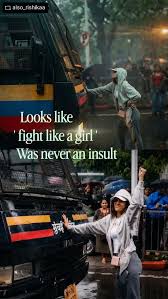
New Delhi, 25 July—When the history of the 2026 Jantar Mantar protests is written, one image is likely to anchor it: a young woman braced against the bonnet of a police van, refusing to move as it tried to carry off detained protesters.
The demonstrations began in Delhi, led by the youth-driven Cockroach Janta Party (CJP) alongside student groups, over anger at repeated examination paper leaks and the government’s handling of the NEET controversy. Students, professionals, and families with young children joined the sit-in, which had run for over a month by the time tensions peaked in July. As the movement spread to other cities, it was in Mumbai during a solidarity march tied to the Delhi crackdown that one woman’s defiance became a nationwide symbol of what the protest had come to represent.
In heavy rain, a young woman stood with arms outstretched, stopping a police vehicle carrying away detained protesters, while others shouted slogans that brought traffic to a halt. The woman, identified as Rhiya Ahir, quickly drew a crowd that began cheering in support. She later told reporters the police hadn’t done their duty properly, and that if they wouldn’t act responsibly, citizens would have to stand up themselves. Social media hailed her as one of the defining faces of the protests a single, unplanned gesture that captured what thousands were trying to say with placards and marches: that they would not simply step aside.
What made the moment resonate wasn’t celebrity or organisation. Ahir is an actor, model, and entrepreneur, not a political worker someone who happened to be present when the van came through, and chose not to move. That ordinariness is precisely why it struck a chord: the anger driving the protests wasn’t confined to seasoned activists or student leaders it had reached people with no visible role in the movement until that moment. One woman, alone, held her ground until a crowd gathered behind her and the detained protesters were reportedly released soon after.
That kind of individual courage sat alongside a more structural presence of women in the protests. They weren’t only visible as participants at the sit-in they held leadership and public-facing roles too, speaking to media and shaping how the movement presented itself. That presence, not just numbers in a crowd, said something about how central women had become to a movement that on paper was about examination reform, not gender.
That visibility, however, has historically come with real risk at protests like this. In earlier demonstrations at the same location, student leaders have alleged that women were manhandled by male police during crackdowns, and activist groups have alleged detentions past sunset in violation of the legal requirement that a magistrate’s permission is needed to arrest women after dark. These aren’t isolated complaints; they surface almost every time such a protest is met with force, pointing to a pattern where women bear risks that rarely appear in official incident reports.
When the July 2026 crackdown intensified with police using lathis and tear gas against the Chalo Sansad march criticism came from across the political spectrum, with opposition leaders questioning why force was used against a largely non-violent demonstration. Whether women were disproportionately affected in this instance isn’t something available reporting fully establishes but the broader pattern from earlier protests makes it a fair question, not an assumption.
It would be easy to reduce a moment like Rhiya Ahir’s to viral spectacle a striking photo, a trending hashtag, a news cycle that moves on. But moments like these tend to matter for a longer reason: they put a face on collective courage, and a woman standing alone in front of a moving vehicle says something a placard cannot. It draws attention precisely because it isn’t the expected image of who “leads” a protest and yet, again and again through this movement, it was.
Women in this movement weren’t only present at the barricades they held speaking roles, blocked vehicles, endured detentions, and, in at least one case, became the image an entire protest was remembered by. That combination visibility, risk, and quiet authority is what makes their role worth examining on its own terms, not folded into a larger story about “the protesters” as an undifferentiated mass.
The 2026 protests were, at their core, about accountability who answers for failure, and who gets to demand it. The women at the frontlines, from an anonymous crowd to a young woman standing her ground on a Mumbai street, answered that question the same way the rest of the movement did only louder, and often first. Power, in these protests, didn’t always look like a microphone. Sometimes it looked like a woman standing still while everything around her moved.

Aspiring multimedia journalist. Dedicated to uncovering underreported community issues and transforming complex data into compelling human stories.