
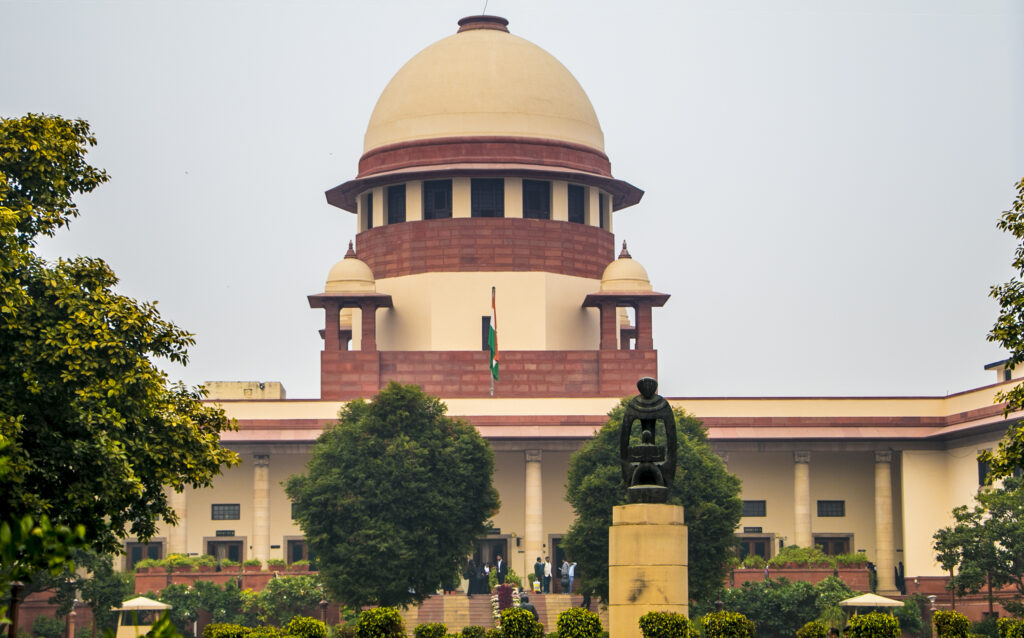
NEW DELHI: The Supreme Court on Thursday sounded an alarm over the use of Artificial Intelligence (AI) in legal proceedings as it flagged a National Company Law Tribunal (NCLT) judgment that relied on fake precedents and cases generated using AI.
Calling for a “zero-tolerance” approach against the use of AI in legal process, the top court declared that a decision stemming from such precedents will be deemed void as it cannot be treated as a “decision in the eyes of the law“.
A Bench of Justice PS Narasimha and Justice Alok Aradhe made the observation while setting aside an NCLT verdict on Essel Infraprojects insolvency after discovering that they had resorted to the use of AI for generating non-existent, fake, and hallucinated citations.
‘Misconduct On Part Of Advocate’
The Supreme Court held that it was “misconduct on part of an advocate” to cite precedents generated using Artificial Intelligence.
“It is necessary for Courts to adopt a zero-tolerance mode for producing, citing or using AI-generated precedents without verification. It is a misconduct on the part of an advocate to cite such judgments without verification. Equally, it is a serious lapse if a judge relies on such a fake or hallucinated AI-generated material as precedents in support of the determination”, said the Bench,
The Bench declared that a decision arising from such precedents would be void, regardless of whether “such material had a direct or indirect bearing on the judgment“.
“Such decisions are to be set aside even if an iota of fake or hallucinated material enters the decision-making process, as it would violate the sanctity of adjudication. It is absolutely necessary to maintain integrity in decision making, and we reiterate and declare zero tolerance for the Bar as well as the Bench to cite, refer to, or rely on such material”, the Court said.
The Supreme Court highlighted that the decision would not impact the fair use of AI technology. However, it also warned against reliance on “fake, hallucinated” material in the legal process.
“It is also clarified that our judgment shall have no bearing on the rightful use of AI, but on the presentation or reliance on fake or hallucinated material as if it were a court precedent”, the Bench remarked.
NCLAT On Top Court’s Radar
The Supreme Court directed the Bar Council to proceed with the matter with utmost seriousness and also questioned the judicial propriety of the NCLAT over the fake judgment.
“What about the Appellate Tribunal? The fake, non-existent judgments escaped scrutiny by the first statutory appellate tribunal. Today’s courts and tribunals implicitly trust lawyers when referring to precedents cited before them. Imagine the hardship of a situation in which the Court must verify the authenticity of each judgment cited by an advocate”, the Court observed.
The Bench held that a decision of a Court or an adjudicating authority based on fake and hallucinating material is “no decision at all”, adding it is equal to “subversion of the rule of law.”

We are a multimedia news network. Website : www.7xnews.com Based in New Delhi (India)
Youtube : umakantlakheraspeaks@gmail.com

