

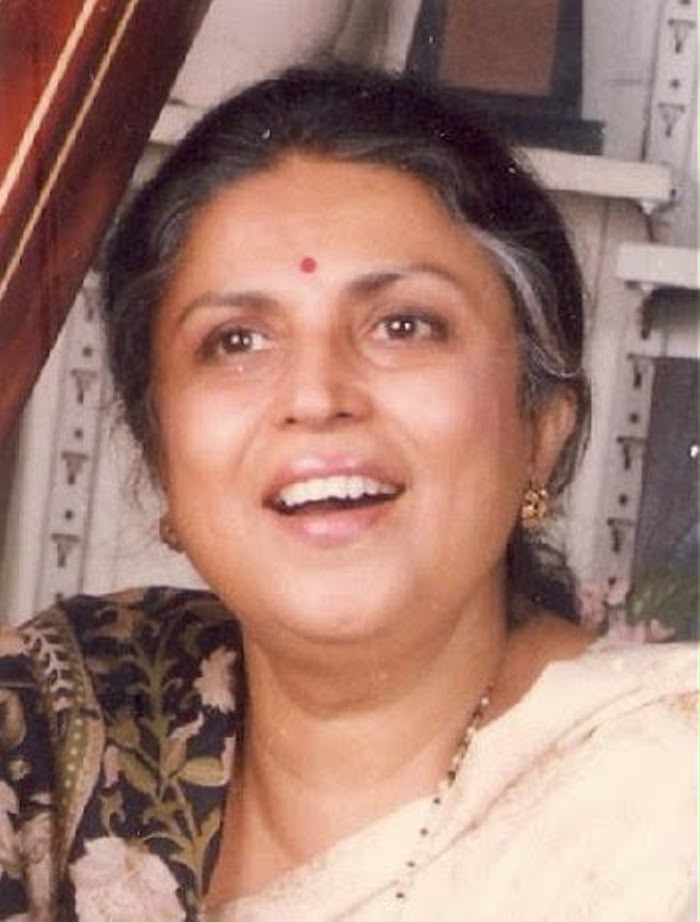
A luminous voice that threaded sorrow and yearning into unforgettable tunes has fallen silent. Suman Kalyanpur, whose simmering, honeyed soprano helped define Bollywood’s golden years, died on May 31, 2026, at her Mumbai home. She was 89.
A life in song
Born Suman Hemmady in Dhaka on January 28, 1937, she moved with her family to Bombay in 1943 and trained in classical and light-classical idioms that later gave her film songs their expressive precision. Discovered after she impressed peers and music circles in early concerts, her first recorded playback assignment came in 1954 for the film Mangu. From that beginning sprang a career that would span decades, hundreds of film tracks and a wide variety of non-film recordings — ghazals, bhajans, thumris and regional repertoire in Marathi, Gujarati, Bengali, Punjabi, Kannada, Bhojpuri, Rajasthani and Oriya.
A singular voice among giants
Suman Kalyanpur’s voice occupied a unique place in the crowded firmament of mid-20th-century Indian playback singers. Critics and listeners often noted the tonal resemblance to Lata Mangeshkar; for Kalyanpur this proved both a blessing and an obstacle. The similarity opened doors to great musical collaborations, yet it sometimes kept her from the full commercial recognition her artistry deserved. Regardless, composers from Naushad and S.D. Burman to Shankar–Jaikishan, Roshan, Madan Mohan and Laxmikant–Pyarelal sought her out for songs that demanded a delicate, expressive touch.
Songs that linger
Kalyanpur’s catalogue includes enduring classics that continue to be played on radio, in films and on streaming playlists. Her plaintive “Na Tum Humein Jaano” from Baat Ek Raat Ki became a staple of longing; the warm restraint of “Tumne Pukara Aur Hum Chale Aaye” showcased her conversational intimacy; and the buoyant “Aajkal Tere Mere Pyar Ke Charche” from Brahmachari — a number long misattributed by many — revealed her gift for light, effervescent phrasing. Across films such as Dil Ek Mandir, Miyan Biwi Razi, Shagun, Noor Mahal and Naseeb she gave memorable renditions: the title song of Dil Ek Mandir, the playful “Chhodo Chhodo Mori Baiyan,” the haunting “Bujha Diye Hain,” the yearning “Mere Mehboob Na Ja” and the contemplative “Zindagi Imtihaan Leti Hai.” Even in later years she recorded occasional songs for cinema, including “O Saathi Re” for the 1988 film Veerana, leaving a recorded legacy of roughly seven to eight hundred songs across languages and genres.
A versatile artist beyond Hindi cinema
Beyond filmi playback, Kalyanpur maintained a rich practice in Marathi music and classical forms. Her Marathi recordings for composers such as Sudhir Phadke and Ashok Patki won regional affection, while her classical and semi-classical work earned her the Sur-Sringar Samsad award multiple times. She also toured internationally, bringing that old-world glamour and warm stage presence to audiences from London to the Gulf and beyond.
Recognition and later years
In recognition of her lifetime contribution to Indian music, the Government of India honoured Suman Kalyanpur with the Padma Bhushan in 2023 — a late but widely applauded acknowledgement of an artist whose work had long been woven into the nation’s cultural memory. Even as she withdrew from the frenetic world of film ceremonies in later decades, she continued to perform on select stages and participate in tribute programmes, keeping the connection with devoted listeners alive.
A measured, dignified legacy
Suman Kalyanpur leaves relatives and a generation of admirers who kept her songs alive through radio, records, television and digital platforms. Her career is a study in musical dignity: she neither sought the limelight nor conformed to it, yet she produced performances of rare lyricism that continue to move listeners across languages and generations.
The end of an era
Her passing marks more than the loss of an individual singer. It is a closing chapter in the history of a musical era when film songs were composed and sung as narrative poetry, and when voices like hers gave those songs a human, intimate presence. As contemporary music evolves, Suman Kalyanpur’s recordings remain a high standard of melodic purity, interpretive restraint and emotional honesty; a gift that will long outlive the singer.

~Hasnain Naqvi is a former member of the history faculty at St. Xavier’s College, Mumbai….
The opinions expressed here are solely those of the author.

