

The geopolitical architecture of the Middle East shifted on its axis yesterday. In a move that felt both inevitable and shocking, the United Arab Emirates (UAE) formally announced its departure from OPEC and the wider OPEC+ alliance, effective May 1. After 59 years of membership, Abu Dhabi has decided that the “sovereign national interest” can no longer be contained within a cartel that counts its primary regional aggressor among its founding members.
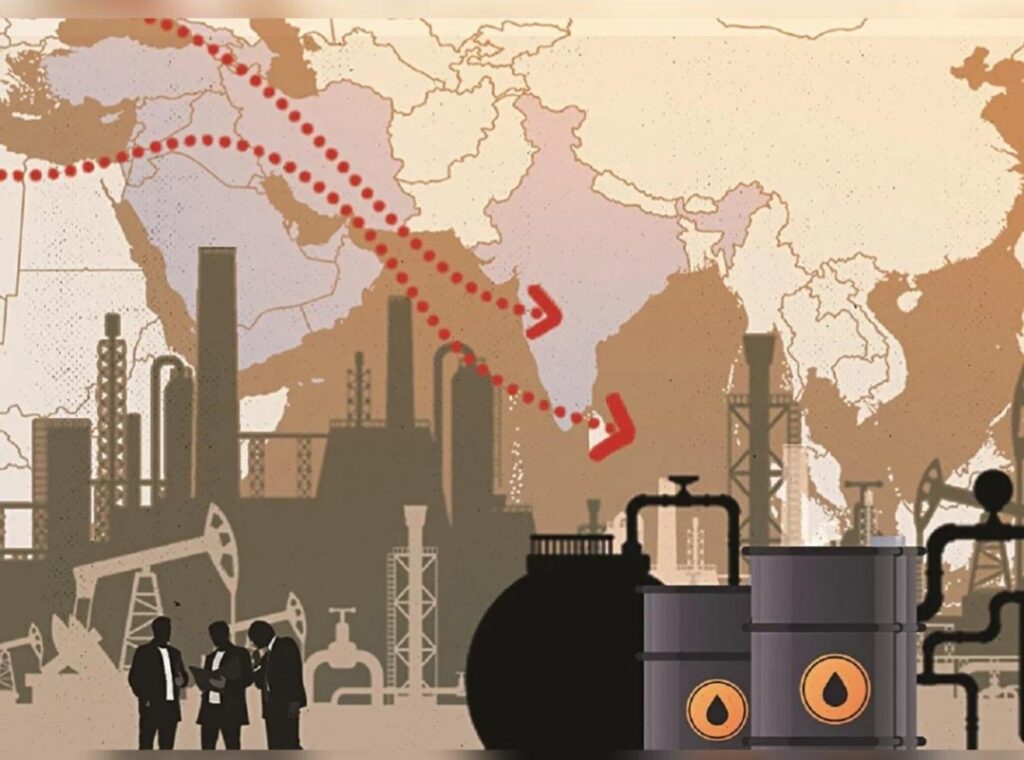
The immediate catalyst is impossible to ignore: the escalating US-Israel-Iran conflict and the subsequent blockade of the Strait of Hormuz. Since March 2026, the world’s most vital energy artery has been effectively severed. For the UAE, this was not merely a market disruption; it was an existential economic assault.
A Cartel Divided Against Itself
The absurdity of the UAE’s position had reached a breaking point. For weeks, Emirati infrastructure has faced the threat of Iranian drone and missile strikes, even as both nations sat as “partners” in the same oil-producing bloc. While Iran’s closure of the Strait of Hormuz forced a staggering 44% collapse in UAE oil exports—dropping production from 3.4 million barrels per day (bpd) to a stranded 1.9 million—the UAE was technically still bound by OPEC quotas designed to keep prices high for the very nation blocking its trade.
By leaving, the UAE is not just escaping a quota; it is escaping a contradiction. Energy Minister Suhail al-Mazrouei’s statement that this is the “right time” for a “sovereign national decision” is a polite diplomatic veil for a hard truth: you cannot maintain a price-fixing alliance with a neighbour that is actively dismantling your export capacity.
The Death of the “Spare Capacity” Cushion
The implications for the global economy are profound. The UAE was the third-largest producer in OPEC, representing roughly 12% of the group’s total output. More importantly, it was one of the few members with significant “spare capacity”—the ability to ramp up production to stabilize the market during crises.
While the UAE is currently physically blocked from exporting its full potential, its exit signals a massive supply surge the moment the Strait of Hormuz reopens. Outside the shackles of OPEC+, the UAE is expected to sprint toward its 5 million bpd capacity target by 2027. This could add 1 million barrels of daily supply to a thirsty global market—roughly 1% of total global demand—effectively neutering OPEC’s ability to dictate prices through scarcity.
A Domino Effect in the Making?
The cracks in OPEC+ are now visible from space. Kazakhstan, another major producer that has long chafed under production caps, is widely rumoured to be weighing its own exit. If the “petrodollar” era was defined by a unified Middle Eastern front, the new era is defined by fragmentation.
The UAE’s move suggests a strategic pivot toward bilateral security and trade deals—most notably with the United States—rather than multilateral dependence on a fractured cartel. Reports of central bank currency swaps and a deepening financial “lifeline” from Washington suggest that the UAE is trading its seat at the OPEC table for a sturdier seat at the table of global Western finance.
The Bottom Line
The 66-year-old cartel, which once brought the West to its knees during the 1973 embargo, is beginning to look like a relic of a different century. As Abu Dhabi chooses flexibility over solidarity and production over price-fixing, the era of the monolithic oil bloc is over. We are entering a “New Energy Age” where national survival and technological agility outweigh the nostalgic loyalty of the old guard.
For the global economy, the UAE’s exit promises a more competitive—if more volatile—energy future. For the Middle East, it confirms that the old alliances have finally burned out in the heat of a new, more dangerous conflict.
symbolic picture used

~Hasnain Naqvi is a former member of the history faculty at St. Xavier’s College, Mumbai….
The opinions expressed here are solely those of the author.