

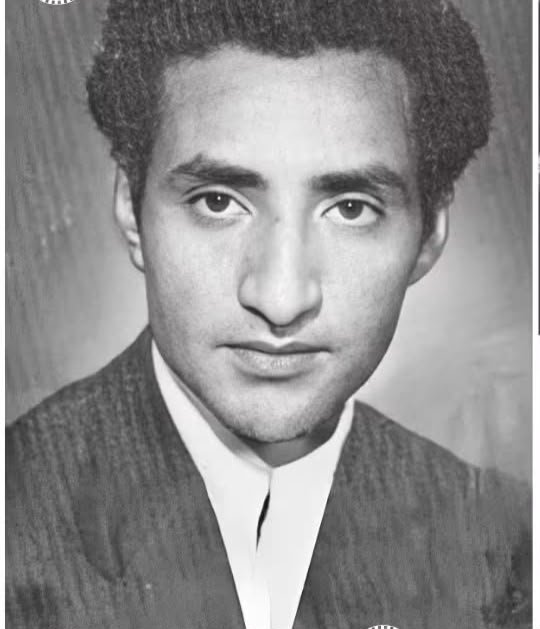
Long before the golden era of Hindi cinema fully blossomed, a single voice quietly redefined the contours of Indian playback singing. In an era dominated by the hypnotic, heavy-inflected style of K.L. Saigal, Ghulam Mustafa Durrani dared to sing differently. He was not merely a performer; he was the bridge between the old world of theatrical vocalizing and the modern, conversational, nuance-rich playback style that ultimately defined Bollywood soundtracking.
From Peshawar with Twenty-Two Rupees
Born in Peshawar in 1919 and raised under strict paternal eyes following the early loss of his mother, Durrani’s passion for music was an act of quiet conviction. His linguistic dexterity—fluently spanning Pashto, Urdu, Hindi, and Punjabi—became his greatest asset. Leaving home for Lahore with just twenty-two rupees in his pocket, he chased an uncertain dream under the mentorship of radio legend Zulfiqar Ali Bukhari before eventually landing at All India Radio in Bombay.
Durrani’s artistic heart recognized no cultural or religious silos. In a remarkably progressive turn for his era, he became one of the first Muslim vocalists to record Hindu devotional bhajans alongside sad ballads, romantic duets, and fiery qawwalis, demonstrating a artistic open-mindedness that mirrored the pluralistic soul of early Indian cinema.
The Pioneer Who Shaped Legends
Discovered for cinema by Sohrab Modi in 1936’s Saaed-e-Hawas, Durrani quickly emerged as a formidable force. Collaborating with master composers like Khurshid Anwar, Naushad, and A.R. Qureshi, his voice elevated classic soundtracks including Nai Kahani, Chand, Deedar, and Mirza Sahiban. Yet, Durrani was far more than a passive vocalist. He composed music for films such as Angoori and State Express, and brought a dignified screen presence as an actor in over two dozen films, including Hum Log and Shyam Benegal’s Bhumika.
Perhaps his most monumental contribution to Indian music was his profound influence on a young Mohammed Rafi. Long before Rafi became a household name, he idolized Durrani, modeling his early phrasing and vocal technique on Durrani’s relaxed, modernized pronunciation. In shaping his own art, Durrani inadvertently forged the blueprint for the singer who would define the next three decades of popular music.
Dispelling Myths and Seeking Stillness
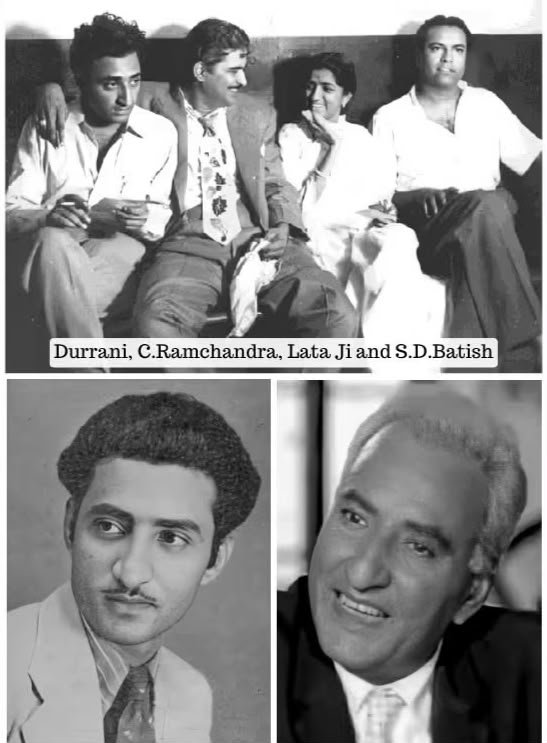
History often suffers from nostalgic sensationalism. In recent years, an apocryphal tale claimed that a recording conflict in 1949 led Lata Mangeshkar to refuse further work with Durrani. Yet the discography tells a vastly different story: the duo continued to collaborate on memorable duets in films like Shair, Heer Ranjha, and Hum Log well into the 1950s, proving that artistic collaboration easily weathered urban legends.
As the film industry grew increasingly commercialized, Durrani—who had married actress Jyoti—quietly stepped away, seeking a higher purpose. He traded the clamour of Bombay studios for spiritual contemplation. As he candidly reflected in a late-career interview with radio icon Ameen Sayani, material success had lost its lustre; his ultimate pursuit had shifted entirely toward inner peace.
When G.M. Durrani passed away on his birthday in 1988, he left behind an irreplaceable legacy. He was the brave pathfinder who proved that playback singing could be intimate, natural, and expressive—a pioneer whose courage paved the way for every voice that followed.

~Hasnain Naqvi is a former member of the history faculty at St. Xavier’s College, Mumbai….
The opinions expressed here are solely those of the author.