

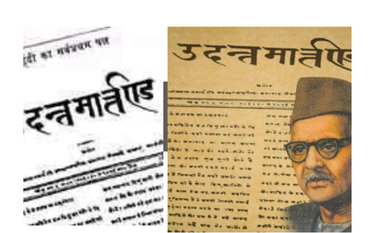
From *Udant Martand* to independent digital platforms, the journey of Hindi journalism mirrors India’s democratic aspirations, political anxieties, and battles over truth and power
The story of Hindi journalism begins with a modest but historic experiment. On 30 May 1826, Pandit Jugal Kishor Shukla published *Udant Martand* (The Rising Sun) from Calcutta (now Kolkata), becoming the first Hindi newspaper in South Asia. Though it survived for barely eighteen months, its significance far exceeded its circulation. It marked the birth of a vernacular public sphere that would, over two centuries, influence political consciousness, shape cultural identity, and democratize public debate across North India.
The bicentenary of Hindi journalism is therefore not merely a media anniversary. It is an opportunity to reflect on how a language became a medium of political awakening, social reform, anti-colonial resistance, and eventually a contested arena shaped by corporate interests, state influence, and digital disruption.
The Rise of a Vernacular Public Sphere
In the decades following *Udant Martand*, Hindi journalism evolved slowly but decisively. During the nineteenth century, journals and periodicals became instruments of linguistic standardization and cultural awakening. Hindi publications helped create a shared reading public among diverse dialect communities while introducing new political and social vocabularies.
A central figure in this transformation was *Bharatendu Harishchandra*, often regarded as the father of modern Hindi literature and journalism. Through journals such as *Kavi Vachan Sudha*, he linked literary innovation with social critique and political awareness. His writings challenged colonial exploitation, social backwardness, and cultural stagnation while promoting Hindi as a modern language of public discourse.
Publications like *Bharat Mitra* further expanded this emerging public sphere by connecting readers across regions and helping cultivate a pan-Hindi consciousness. Journalism increasingly became a vehicle not just for information, but for collective identity formation.
From Literary Revival to Political Resistance
By the early twentieth century, Hindi journalism had acquired a distinctly political character. Newspapers such as *Abhyudaya*, associated with Madan Mohan Malaviya, and *Pratap*, founded by Ganesh Shankar Vidyarthi, transformed journalism into a powerful instrument of nationalist mobilization.
These newspapers reported on peasants, labourers, civic protests, and colonial repression, often at immense personal risk to editors and reporters. Fines, censorship, confiscation of presses, and imprisonment became common colonial tactics against the vernacular press.
During the Gandhian era, Hindi journalism achieved unprecedented reach. Gandhi’s *Navajivan*, the Varanasi-based *Aj*, and journals such as *Matwala* and *Hans* carried the ideas of satyagraha, swadeshi, social reform, and anti-colonial resistance deep into rural India.
But the Hindi press did more than disseminate nationalist ideology. Through satire, serialized essays, literary commentary, and reportage, it translated abstract constitutional and political ideas into everyday concerns — land dispossession, caste injustice, rural indebtedness, and economic exploitation. Journalism became a school of political imagination for ordinary Indians.
In moments of severe repression, Hindi journalists often operated clandestinely. During periods of censorship and emergency restrictions, underground bulletins, cyclostyled pamphlets, and secret networks kept information circulating. Journalism was not merely a profession; it became an act of resistance.
Independence and the Democratic Expansion of Hindi Media
After Independence, Hindi journalism entered a new phase shaped by the responsibilities of nation-building. Newspapers became forums for debates on development, literacy, secularism, linguistic identity, and social justice.
Yet structural inequalities persisted. English-language media continued to receive greater institutional support, advertising revenue, and elite readership despite the far larger social reach of vernacular journalism.
From the 1960s onward, however, Hindi journalism underwent massive expansion. Newspapers such as *Dainik Jagran*, *Dainik Bhaskar*, *Navbharat Times* and *Jansatta* built extensive networks across smaller towns and semi-urban India. This expansion democratized access to news and strengthened local reporting ecosystems focused on municipal governance, courts, agriculture, education, and regional politics.
For millions of readers outside metropolitan India, Hindi newspapers became the primary interface with democratic life. They connected local grievances with state and national politics, significantly widening public participation.
At the same time, financial pressures and dependence on local advertisers often limited investigative capacity and editorial autonomy. Resource constraints shaped newsroom priorities, especially in regional markets.
Liberalization and the Transformation of News
The economic liberalization of the 1990s fundamentally altered the media landscape. Corporate ownership expanded rapidly, advertising overtook subscriptions as the primary revenue source, and market-driven logic increasingly governed editorial decisions.
The rise of 24×7 television intensified competition. Hindi news channels evolved into spectacles driven by ratings, dramatic anchors, ideological confrontations, and continuous “breaking news” cycles. The slower traditions of reportage, field investigation, and editorial nuance steadily weakened under commercial pressure.
Over the past decade, these tensions have acquired sharper political dimensions. The phrase “Godi media,” popularized by journalist Ravish Kumar, entered public discourse as a critique of sections of mainstream media perceived to function as amplifiers of government narratives rather than independent watchdogs.
Simultaneously, ownership consolidation by large corporate conglomerates intensified concerns over editorial independence. High-profile acquisitions and financial restructuring deepened anxieties about shrinking space for dissent, while journalists reporting critically on governments increasingly faced online harassment, legal scrutiny, restricted access, and economic vulnerability.
The crisis confronting Hindi journalism today is therefore not merely technological or commercial. It is fundamentally a question of editorial autonomy, democratic accountability, and the capacity of the media to question power.
The Emergence of a Digital Counter-Public
Even as sections of legacy media became more centralized and commercially driven, a parallel digital ecosystem began to emerge. Independent journalists, web portals, YouTube channels, podcasts, and subscription-supported platforms started producing long-form Hindi reportage, investigative journalism, fact-checking, and political analysis outside traditional television networks.
This digital sphere has significantly broadened access to independent journalism in Hindi. Audiences increasingly consume news on smartphones rather than through newspapers or television, allowing smaller creators and independent reporters to bypass conventional ownership structures.
At its best, this digital counter-public has revived watchdog journalism and created new spaces for dissent and public reasoning. Yet it also faces serious challenges. Algorithmic dependence, misinformation, financial instability, platform regulation, and hyper-partisan amplification complicate the digital public sphere even as independent creators attempt to hold institutions accountable.
What the Bicentenary Demands
The bicentenary of Hindi journalism invites reflection not only on history but also on institutional futures.
First, it reminds us that the Hindi press historically functioned as a public educator. It enabled millions to think politically in their own language and connect local experiences with national questions.
Second, it compels a reassessment of media structures and incentives. Journalism cannot sustain democratic functions without economic models that support investigative work, protect reporters from intimidation, and preserve editorial plurality.
Third, the anniversary underscores the need for language-sensitive media policy. Regulatory frameworks designed without regard for regional and vernacular realities risk privileging large media corporations while marginalizing smaller outlets serving vast Hindi-speaking regions. Public-interest journalism in Indian languages requires institutional support, transparency in ownership structures, and low barriers for independent digital publishers.
Finally, the bicentenary is also a civil-society moment. Archives and libraries must accelerate efforts to digitize vernacular press records, educational institutions should integrate the history of Indian-language journalism into curricula, and journalism schools must treat reportage in Indian languages as a primary practice rather than a secondary translation exercise.
A Legacy Still Being Written
From clandestine colonial pamphlets to livestreams and digital broadcasts, Hindi journalism has continually adapted to changing political and technological landscapes. Across two centuries, it has been a cultural force, a political instrument, a democratic platform, and increasingly a contested commercial enterprise.
The central question now is whether it can preserve its role as a forum for public reasoning and accountability.
The bicentenary is not merely a nostalgic celebration. It is both a warning and an invitation. If Hindi journalism is to remain a language of public conscience, it must rebuild institutions that reward investigative courage, protect plural voices, and resist the erosion of editorial independence by political and corporate power.
Two hundred years after Udant Martand first appeared, the challenge remains unchanged: to ensure that the rising sun of the vernacular public sphere is not dimmed by censorship, market pressures, or the weakening of democratic trust. The future of Hindi journalism will depend on whether India chooses merely to celebrate this legacy — or to safeguard it.

~Hasnain Naqvi is a former member of the history faculty at St. Xavier’s College, Mumbai….
The opinions expressed here are solely those of the author.