

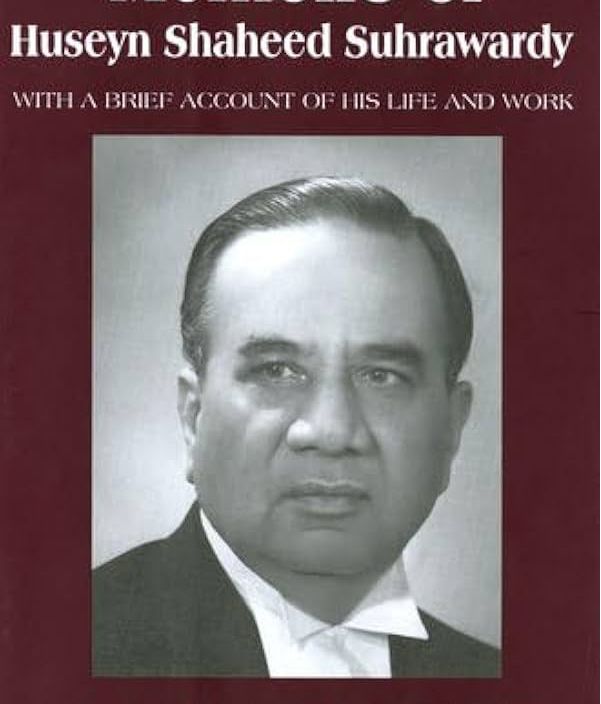
Kolkata’s decision to rename Suhrawardy Avenue as Gopal Mukherjee Road is not just a civic act; it is a public test of historical literacy, and on current evidence the state has failed it. The controversy is not about whether Gopal Chandra Mukherjee, or Gopal Patha, deserves recognition for his role in the turbulent days of 1946, but about whether the authorities understood which Suhrawardy they were erasing in the process.
A Case of Mistaken Identity:
The wrong Suhrawardy
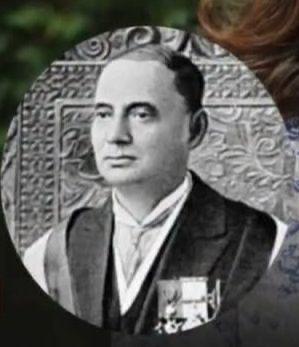
The road was not named for Huseyn Shaheed Suhrawardy, the politically polarizing Bengal premier later associated with the 1946 Calcutta violence in popular memory; it was named in honor of his uncle, Sir Dr. Hassan Suhrawardy, a distinguished surgeon and the first Muslim Vice-Chancellor of Calcutta University, who held the post from 1930 to 1934.
A Calcutta Municipal Gazette record cited in later reporting shows the street being christened Suhrawardy Avenue in 1933, years before the riots and long before the nephew’s name became a political flashpoint.
That distinction matters. To conflate an educator’s civic honour with a nephew’s later political stain is not historical justice; it is sloppy vengeance dressed up as correction.
History as a Political Weapon
Chief Minister Suvendu Adhikari hailed the renaming as a correction of a “historical wrong,” but the very phrasing exposes the problem: if the original dedication was to Hassan Suhrawardy, then the state has spent its moral capital on the wrong target. As The Telegraph reported, historians immediately argued that the government had “picked the wrong Suhrawardy,” a criticism that goes to the heart of the affair.
This is where political symbolism becomes intellectual bankruptcy.
A government can choose to honour Gopal Mukherjee if it wants, but it cannot do so by trampling on a separate historical legacy and then calling the wreckage patriotism.
Gopal Patha and the Burden of Memory
Gopal Chandra Mukhopadhyay’s place in Bengal’s fraught memory is real, but it is also morally complicated. Reporting and later historical discussion describe him as a local meat seller who organized armed resistance in the wake of the 1946 killings, yet accounts also note that his life cannot be reduced to a single heroic slogan or a single communal lens. Even his family has, in public interviews, rejected simplistic glorification and insisted that his story was bound up with the violence of the era rather than clean redemption.
That complexity is precisely why political branding is a poor substitute for history. The city does not need sanctified myths; it needs accuracy, restraint, and the humility to admit when a loud decision is built on a quiet error.
The Lesson Kolkata needs
Kolkata has every right to debate whom it commemorates. It does not have the right to erase one man’s legacy because another man of the same surname is easier to target in the politics of the moment. If public memory is to mean anything, it must be anchored in fact before it is weaponized for vote-bank theatre.
The tragedy here is not merely that a road changed its name. It is that a city famous for argument seems to have mistaken noise for scholarship, and symbolism for truth.

~Hasnain Naqvi is a former member of the history faculty at St. Xavier’s College, Mumbai….
The opinions expressed here are solely those of the author.