

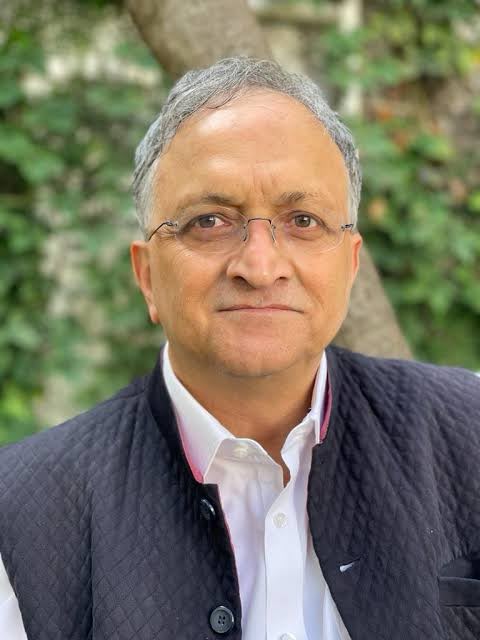
In his May 30, 2026, column in The Telegraph (Kolkata), “Rahul Gandhi as PM | Modi’s Enablers,” historian Ramachandra Guha reprises a familiar refrain: the Congress remains a family firm, with Rahul Gandhi lacking the discipline, gravitas, and curriculum vitae to challenge Narendra Modi effectively. He portrays the Gandhis as unwitting or witting accomplices in the BJP’s consolidation of power, echoing arguments he made in his 2015 piece, “Two Leaders and Their Parties.” In a recent interview with Karan Thapar for The Wire, Guha doubled down, calling Rahul a dilettante short on commitment and charisma, unlikely ever to become prime minister, and suggesting that even the Bharat Jodo Yatra represented a rare flash of focus amid otherwise fleeting social media interventions.
This continuity in critique, spanning over a decade amid profound shifts in Indian politics, reveals less about Rahul Gandhi than about the historian’s own analytical stasis.
The Perils of False Equivalence
Guha’s analysis rests on a posture of elite liberal equidistance that equates the Congress’s organizational shortcomings with the BJP’s ideological machine. He argues that the Gandhis’ grip enables Hindutva dominance by failing to build a robust alternative. Yet this overlooks the asymmetric realities: a resource-rich ruling dispensation systematically leveraging state institutions, enforcement agencies, and media influence against a fragmented opposition.
Blaming Rahul Gandhi’s personal style or dynastic background as the primary enabler shifts accountability from those wielding power to those resisting it.
In an unequal landscape marked by defections and institutional pressures, such equivalence misdiagnoses the core challenge to India’s democracy.
The Sociological Role of the “Family Firm”
Guha’s persistent use of corporate shorthand—“family firm”—dismisses the Nehru-Gandhi lineage as a feudal relic ill-suited to modern meritocracy. However, in a hyper-fragmented polity prone to state-sponsored splits, the family has served as ideological glue, providing a resilient, unpurchasable anchor for a pluralistic party.
Far from mere stubbornness, this structure has sustained the Congress through crises. Initiatives like the Bharat Jodo Yatra demonstrated its capacity to reconnect with the masses, yielding hard-fought gains in 2024 that regional outfits often could not match under similar pressures. Guha’s focus on dynasty ignores how this anchor counters an aggressive majoritarianism that purchases or pressures alternatives into submission.
Beyond the Myth of the Immaculate Saviour
Central to Guha’s despair is the assumption that stepping aside by the Gandhis would summon a perfect, self-made opposition leader attuned to policy depth and administrative finesse. This ideal ignores contemporary political warfare, where challengers face disproportionate institutional retaliation.
Rahul Gandhi’s evolution—from hesitant insider to a figure anchoring broad coalitions against majoritarianism—reflects adaptation to real conditions. Guha’s demand for mid-century parliamentary decorum feels disconnected from ground realities, where survival demands grit over sanitized credentials. His recent emphasis on Rahul’s supposed lack of experience in crises (energy shortages, border tensions) further underscores this gap: it judges the opposition by standards the ruling side evades through incumbency advantages.
The Historian’s Own Stagnation
There is irony in Guha’s position. A chronicler of India’s transformations, he recycles anti-dynastic tropes frozen since 2013, even as electoral landscapes, coalition dynamics, and public mobilizations have evolved. His Scroll.in reflections and Wire interview reinforce the same script: the Gandhis fritter away opportunities, with Rahul’s interventions lacking lasting impact beyond social media likes.
This repetition is not profound insight but evasion. It demands perfection from a battered opposition while the “house is on fire.” The real stagnation lies not in a family striving to unify a coalition, but in elite commentary that clings to outdated templates amid an unequal, high-stakes democratic contest.
India’s opposition battle is messy and asymmetric. Misreading it through a static elite lens does little to illuminate—or advance—the republic’s complex struggles.
Veteran Journalist and Political Commentator