

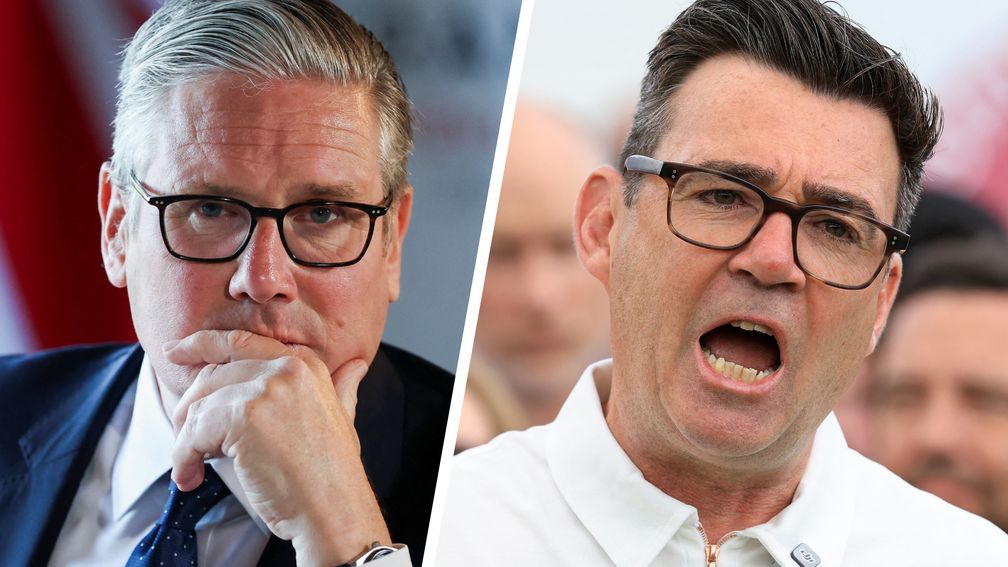
New Delhi, 22 June—British Prime Minister Keith Starmer today announced his resignation, paving the way for Britan to have its seventh leader in 10 years with his rival Andy Burnham being tipped as a front runner to take over the reins to lead the United Kingdom.
Till a new leader is elected by the time parliament returns in September, Starmer will continue to be in office. Less than two years after he won a landslide election victory that promised to end chaos in British politics, Starmer said it was clear that his party wanted him to go.
He said nominations for anyone to replace him would open on July 9.
Starmer was once hailed as the leader who would bring pragmatism and stability to Britain after years of political chaos. When he quit as prime minister on Monday, the very lack of ideology that propelled him to power turned out to be his fall from power.
After guiding the Labour Party into power in 2024 with the biggest parliamentary majority in Britain’s modern history, Starmer focused on what he believed was possible to achieve, rather than setting out a clear vision of a future Britain.
“The question my party is asking now is whether I am best placed to lead us into the next general election, I have heard the answer of my parliamentary party to that question, and I accept that answer with good grace,” he said.
Starmer is the sixth prime minister in a decade to stand outside 10 Downing Street and announce a premature departure. It comes the day before Britain marks the 10th anniversary of its vote to leave the European Union, a decision that still roils the country’s economy and politics.
He has struggled to deliver promised economic growth, repair tattered public services and ease the cost of living, and has been hamstrung by repeated missteps, including his decision to appoint Peter Mandelson, a scandal-tarnished friend of Jeffrey Epstein, as the UK ambassador to the United States.
Labour is losing liberal voters to the growing Green Party and facing a rising Reform UK, the Nigel Farage -led anti-immigration party that consistently leads in nationwide opinion polls.
Starmer’s initially warm relationship with US President Donald Trum soured in recent months over issues including the Iran war, which the UK didn’t join.
In contrast to missteps on the domestic front, Starmer has won praise for his international role, notably in rallying European support for Ukraine in its fight against Russia’s invasion, and working to mitigate the economic and political turmoil unleashed by the Iran conflict.
While many Labour lawmakers have rallied behind Burnham, some have said that Starmer had been treated unfairly. London legislator Neil Coyle railed on X against “the prospect of an utter stitch-up & the media circus being rewarded.
“When the next leader cannot change Trump, Iran, Ukraine, Putin, Musk, broadcast editorial & algorithm bias overnight they’ll bay for his blood too. Better keep that guillotine sharp,” he wrote.
The threat to Starmer, which had been building for months, increased sharply on Friday when Burnham, the Greater Manchester mayor, decisively won a parliamentary election to return to Westminster, beating a candidate from Nigel Farage’s Reform UK party, which has led national opinion polls for more than a year.
That victory gave hope to Labour lawmakers that Burnham, a career politician known for his communication skills, could transform the fortunes of a party that has lost support under Starmer, whose popularity ratings have sunk to the lowest for any British leader.
Starmer thanked his colleagues for their support, his voice cracking with emotion as he also paid tribute to his wife and children.
Though the British currency Pound and British government bonds were steady in the immediate aftermath of Starmer’s announcement, the road for his successor is full of roadblocks and stones.
The change has many pitfalls and is risk prone. While Burnham has said that the country needs fundamental change and to bring down the cost of living, he is yet to make his approach to foreign affairs, the economy and defence clear.
Like Starmer, Burnham could find he has little room to manoeuvre, hemmed in by bond market investors opposed to any additional borrowing. The electorate is angry as it believes the country is not working properly. Britain already has the highest borrowing costs in the Group of Seven wealthy nations due to its high debt and interest payments, years of anaemic economic growth, its struggles to cut spending and the need to invest in areas like defence.
Investors are divided over whether Burnham, who said last September that Britain had to get “beyond this thing of being in hock to the bond markets” would respect the need to reassure markets, Reuters reported.Burnham has since said he was misrepresented but then tackling economic challenges may prove to be his biggest challenge.
New Delhi, 22 June—British Prime Minister Keith Starmer today announced his resignation, paving the way for Britan to have its seventh leader in 10 years with his rival Andy Burnham being tipped as a front runner to take over the reins to lead the United Kingdom.
Till a new leader is elected by the time parliament returns in September, Starmer will continue to be in office. Less than two years after he won a landslide election victory that promised to end chaos in British politics, Starmer said it was clear that his party wanted him to go.
He said nominations for anyone to replace him would open on July 9.
Starmer was once hailed as the leader who would bring pragmatism and stability to Britain after years of political chaos. When he quit as prime minister on Monday, the very lack of ideology that propelled him to power turned out to be his fall from power.
After guiding the Labour Party into power in 2024 with the biggest parliamentary majority in Britain’s modern history, Starmer focused on what he believed was possible to achieve, rather than setting out a clear vision of a future Britain.
“The question my party is asking now is whether I am best placed to lead us into the next general election, I have heard the answer of my parliamentary party to that question, and I accept that answer with good grace,” he said.
Starmer is the sixth prime minister in a decade to stand outside 10 Downing Street and announce a premature departure. It comes the day before Britain marks the 10th anniversary of its vote to leave the European Union, a decision that still roils the country’s economy and politics.
He has struggled to deliver promised economic growth, repair tattered public services and ease the cost of living, and has been hamstrung by repeated missteps, including his decision to appoint Peter Mandelson, a scandal-tarnished friend of Jeffrey Epstein, as the UK ambassador to the United States.
Labour is losing liberal voters to the growing Green Party and facing a rising Reform UK, the Nigel Farage -led anti-immigration party that consistently leads in nationwide opinion polls.
Starmer’s initially warm relationship with US President Donald Trum soured in recent months over issues including the Iran war, which the UK didn’t join.
In contrast to missteps on the domestic front, Starmer has won praise for his international role, notably in rallying European support for Ukraine in its fight against Russia’s invasion, and working to mitigate the economic and political turmoil unleashed by the Iran conflict.
While many Labour lawmakers have rallied behind Burnham, some have said that Starmer had been treated unfairly. London legislator Neil Coyle railed on X against “the prospect of an utter stitch-up & the media circus being rewarded.
“When the next leader cannot change Trump, Iran, Ukraine, Putin, Musk, broadcast editorial & algorithm bias overnight they’ll bay for his blood too. Better keep that guillotine sharp,” he wrote.
The threat to Starmer, which had been building for months, increased sharply on Friday when Burnham, the Greater Manchester mayor, decisively won a parliamentary election to return to Westminster, beating a candidate from Nigel Farage’s Reform UK party, which has led national opinion polls for more than a year.
That victory gave hope to Labour lawmakers that Burnham, a career politician known for his communication skills, could transform the fortunes of a party that has lost support under Starmer, whose popularity ratings have sunk to the lowest for any British leader.
Starmer thanked his colleagues for their support, his voice cracking with emotion as he also paid tribute to his wife and children.
Though the British currency Pound and British government bonds were steady in the immediate aftermath of Starmer’s announcement, the road for his successor is full of roadblocks and stones.
The change has many pitfalls and is risk prone. While Burnham has said that the country needs fundamental change and to bring down the cost of living, he is yet to make his approach to foreign affairs, the economy and defence clear.
Like Starmer, Burnham could find he has little room to manoeuvre, hemmed in by bond market investors opposed to any additional borrowing. The electorate is angry as it believes the country is not working properly. Britain already has the highest borrowing costs in the Group of Seven wealthy nations due to its high debt and interest payments, years of anaemic economic growth, its struggles to cut spending and the need to invest in areas like defence.
Investors are divided over whether Burnham, who said last September that Britain had to get “beyond this thing of being in hock to the bond markets” would respect the need to reassure markets, Reuters reported.Burnham has since said he was misrepresented but then tackling economic challenges may prove to be his biggest challenge.
Veteran Journalist and Political Commentator