

New Delhi, 17 June— Fate of a peace deal in West Asia remains uncertain as a mercurial US President Donald Trump once again showed his double-faced character saying said that if he does not like the text of the deal, the US will start striking the Islamic Republic again just two days before the Washington and Tehran are to sign the memorandum of understanding to end months of war.
A deal, whose MoU is expected to be signed in next two days, is caught between the complex web of Trump’s mercurial and indecisive temperament, Israeli Prime Minister Benjamin Netanyahu’s existential dilemma and Zionist media’s mechanism.
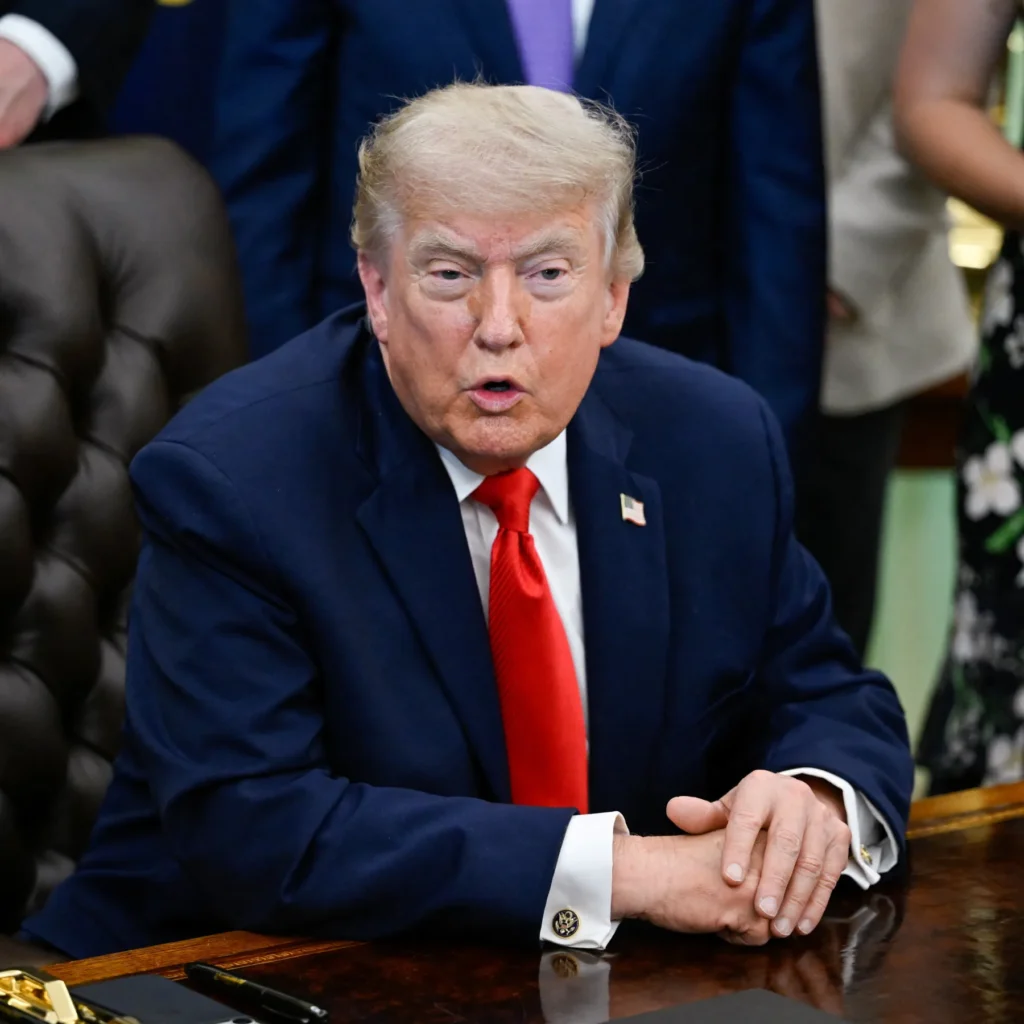
While addressing reporters at the G7 Summit in France alongside Egyptian President Abdel Fattah el-Sisi, Trump on Wednesday said that the agreement between the US and Iran is “not final”.
The agreement with Iran is “not final”, Trump said, describing it as “a Memorandum of Understanding”. “No, it’s not final. It’s a Memorandum of Understanding. And if I don’t like it, we’ll go back to shooting at them, dropping bombs on their head. If I don’t like it, if they don’t behave, we’ll go right back to dropping bombs right smack in the middle of their head,” he said.
Like his birth sign Gemini. Double bodies Trump blowing hot and cold said the memorandum of understanding with Iran does not include immediate sanctions relief, while continuing to praise the framework agreement as a strong step forward. Speaking at the G7 summit, Trump said, “That’s a very strong deal. Nobody knows what it is, but it’s very strong, and most people seem to be very happy.” He also pointed to positive market reactions as evidence of confidence in the agreement.
Meanwhile, Tehran has accused Israel of violating the Lebanon ceasefire 84 times since Tehran and Washington signed their memorandum of understanding, warning of a “harsh response” if the attacks continue. The warning came after Israeli forces killed four people in southern Lebanon and as US President Donald Trump asked Israeli Prime Minister Benjamin Netanyahu to be “more responsible” in Lebanon.
A third tanker carrying Iranian oil has crossed the US Navy’s blockade line in the Gulf of Oman, according to TankerTrackers. Iranian foreign minister Abbas Araghchi said any deal with the US must include sanctions relief, the release of frozen Iranian assets and Israel’s withdrawal from Lebanon.
Washington and Tehran are set to formally sign an interim agreement on June 19, aimed at ending months of US-Israeli war on Iran.
While key details of the arrangement are still coming up, the memorandum of understanding is expected to make way for 60 days of negotiations focused on Iran’s nuclear programme and other outstanding issues. The full text of the agreement has not yet been made public.
Even as US and Iran try desperately to inch closer to a deal to end months of conflict, Iran foreign minister Abbas Araghchi struck a cautious tone, saying: “We have a history of broken commitments… a history of agreements being torn up. All of this is present in our minds.”
While Iran and US signed the MoU virtually, raising hopes for a final deal to end months of conflict, but US intelligence agencies have ‘serious’ doubts over Iran’s willingness to make the nuclear concessions, Axios reported.
It must be underlined that Axios is releasing planted news stories to wreck the deal. Axios, knowledgeable sources said, is heavily financed by the pro-Israel Zionist lobby and is seemingly working to preserve, protect and promote Israel’s strategic interests. Netanyahu’s government, presently under domestic pressure, wants to continue the war like situation and is against the upcoming deal.
Though Trump has made his displeasure with the Israeli Prime Minister known but it seems that the US President is helpless to defy the Zionist lobby’s pressure,
As per the memo accessed by Bloomberg, the US and regional partners will work on redevelopment projects for Iran, as part of a war compensation. The memo adds that funds of at least $300 billion will be provided.
The United States and Iran have reached an interim agreement aimed at ending the conflict, with President Donald Trump saying the deal prevents Tehran from obtaining a nuclear weapon, news agency Reuters reported. The memorandum extends the fragile ceasefire announced in April by another 60 days to create space for negotiations on a permanent settlement.
Under the agreement, Washington will lift its blockade on Iranian ports, while Iran will restore the movement of oil tankers and commercial shipping through the Strait of Hormuz.
A senior US official said Iran will be allowed to resume oil exports immediately after the agreement is signed, supported by banking, transport and insurance arrangements.
Israel has distanced itself from both the April ceasefire and the latest US-Iran understanding, raising questions over the durability of the truce.
US Vice President JD Vance suggested Israel and Lebanon are covered by the agreement, while Israeli Prime Minister Benjamin Netanyahu maintained that Israel is not bound by its terms.
Although both sides say the Strait of Hormuz will reopen from Friday, shipping companies remain cautious and are waiting to see whether the ceasefire holds before fully resuming operations.
In between to divert the attention from the expected criticism over the deal which is more or less the same which Tehran was willing to agree before the February US-Isreal attack on Iran, Trump accused former President Barack Obama of “bribing” Iran during the 2015 nuclear deal, claiming the Obama administration sent “$1.7bn in cash” to Tehran.
Speaking at the G7 summit in France, Trump said he had not pursued a similar approach in current negotiations and criticized Obama’s handling of relations with Iran.
Trump criticised the 2015 Iran nuclear deal and again attacked Obama’s handling of the agreement. Trump claimed that Iranians mocked Obama during the negotiations, saying: “He is a stupid son of a b*tch.”
Meanwhile, Israel’s ambassador to the United Nations Danny Danon has criticised the emerging US-Iran agreement, calling it “very bad” for Israel, the United States, and Gulf countries. Speaking to Channel 14, he said the framework could strengthen Iran’s position because Washington is moving quickly to conclude negotiations. However, he stressed that no final deal has been reached yet, describing it only as a framework for continued talks.
Veteran Journalist and Political Commentator