

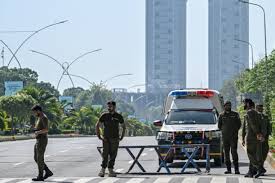
In the volatile arena of Middle Eastern geopolitics, few documents arrive with as much fanfare—and fragility—as the Islamabad Memorandum of Understanding signed between Iran and the United States. Billed as a 14-point framework to pause military hostilities, the agreement has already encountered its first major test. Less than a day after ink dried, Iranian state media announced the suspension of the associated 60-day negotiation window.
The trigger: fresh Israeli strikes on Lebanon.
Ayatollah Sayyid Mojtaba Hosseini Khamenei’s carefully worded public message, issued on June 18, offers critical insight into Tehran’s internal calculus and casts a long shadow over the deal’s viability.
Conditional Endorsement from the Top
The Supreme Leader’s statement is neither a ringing endorsement nor an outright rejection. Framed in the traditional religious and revolutionary idiom, it acknowledges the MoU’s existence while emphasizing that his approval was granted principally out of institutional loyalty to the president as head of the Supreme National Security Council. Khamenei stresses that he held “a different view” on principle but prioritized safeguarding Iranian rights and the “Resistance Front.” He explicitly conditions Iran’s continued engagement on the fulfillment of certain understandings and warns that future in-person negotiations will not equate to “acceptance of the enemy’s position.”
This is classic Khamenei rhetoric: pragmatic flexibility wrapped in ideological steel. By publicly distancing himself from the initiative while granting reluctant permission, the new Supreme Leader telegraphs restraint without surrendering strategic ground. The message ends on a note of pious optimism for Iranian victories, a subtle reminder that the revolutionary project remains paramount.
Hardliners Ascendant?
The swift suspension of talks following Israeli actions in Lebanon suggests the hardline elements—particularly within the Islamic Revolutionary Guard Corps (IRGC)—retain significant influence, if not outright dominance, in shaping policy. The timing is telling. Rather than using the MoU as a platform for de-escalation, Tehran moved immediately to freeze progress when its ally in Lebanon came under fire. This aligns with the Supreme Leader’s emphasis on the Resistance Axis and indicates that any diplomatic opening with Washington remains subordinate to broader regional commitments.
Does this reveal a schism between hardliners and moderates within the Iranian system?
Not necessarily a clean fracture, but a clear hierarchy. The president’s role in shepherding the MoU reflects a faction open to tactical diplomacy, possibly driven by economic pressures or war fatigue. Yet the Supreme Leader’s statement and the rapid suspension demonstrate that ultimate authority rests with those who view concessions through the lens of ideological purity and strategic encirclement.
Mojtaba Khamenei’s position appears to consolidate rather than challenge the IRGC’s worldview:
Iran will not settle for partial measures. The demand, implicitly and explicitly, is for a “complete and permanent cessation of hostilities on all fronts.”
The Israeli Wild Card and American Choices
The catalyst for the current impasse—Israeli military moves against Lebanon—underscores a perennial truth in the region: bilateral U.S.-Iran understandings cannot be insulated from the broader axis of conflict. Israel’s demonstrated willingness to press its security objectives regardless of Washington-Tehran diplomacy places the onus squarely on the Trump administration. If the U.S. president seeks to deliver on promises of regional stability and reduced American entanglement, he must now confront the reality that Israel views Iran and its proxies as existential threats requiring proactive management.
For Tehran, the episode validates longstanding skepticism.
The Supreme Leader’s message, read alongsid

~Hasnain Naqvi is a former member of the history faculty at St. Xavier’s College, Mumbai….
The opinions expressed here are solely those of the author.