

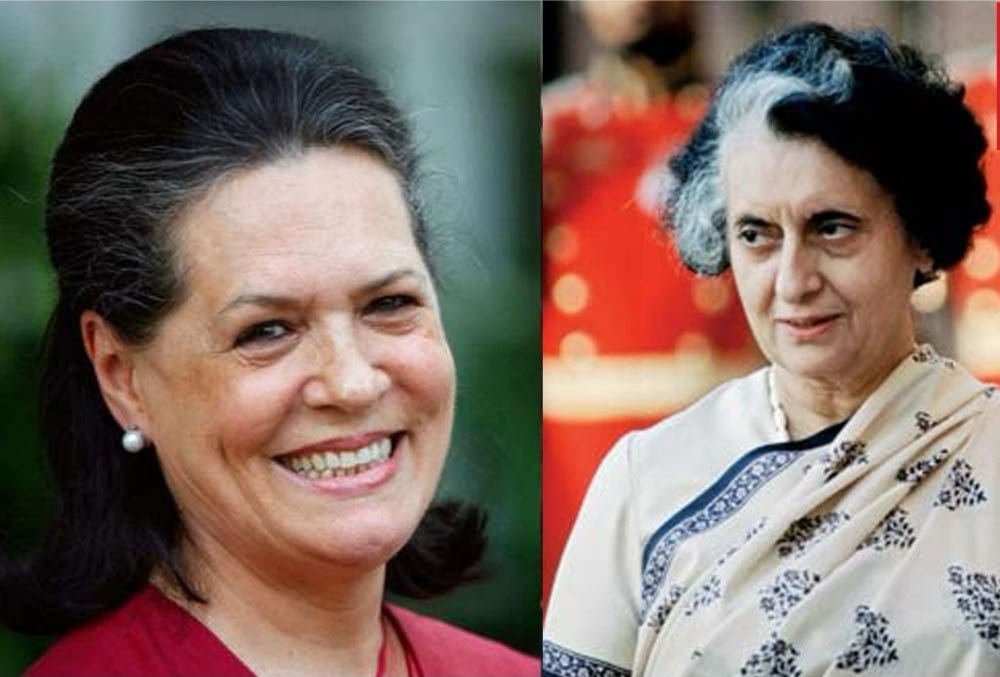
Behind the formidable Prime Minister was a loving mother, an affectionate grandmother and a vulnerable human being
Indira Gandhi remains one of the most powerful, controversial and consequential figures in modern Indian history. Her political career was marked by extraordinary determination, decisive leadership and an uncompromising exercise of authority. To admirers, she was the Iron Lady who gave India a formidable international standing; to critics, she was a leader whose authoritarian instincts culminated in the Emergency of 1975. Yet, behind this formidable public personality was a woman capable of tenderness, affection, insecurity and emotional vulnerability.
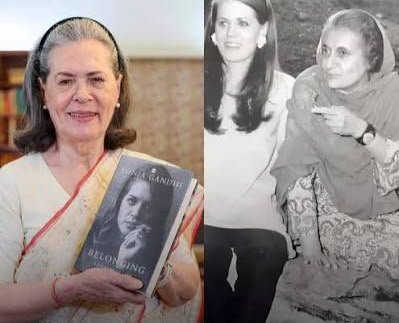
It is this lesser-known Indira Gandhi who emerges from Sonia Gandhi’s autobiography, Belonging: A Journey of Love. Drawing upon nearly two decades of personal association as her daughter-in-law, Sonia offers an intimate portrait of a woman who could be intimidating and temperamental but was equally loving, caring and deeply attached to her family.
Her account is particularly revealing because it moves beyond political assessments and official histories to explore Indira’s private world, her domestic habits, relationships and emotional struggles.
A formidable personality and an unpredictable temper
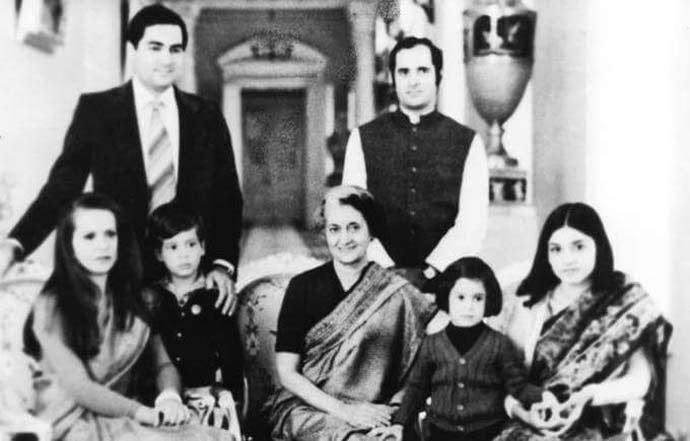
When Sonia Maino married Rajiv Gandhi in 1968 and entered the Nehru-Gandhi household, she found herself living with a woman whose authority extended far beyond the political establishment. Indira was Prime Minister, and her imposing personality initially left the young bride somewhat intimidated.
Sonia recalls that her mother-in-law’s occasional explosions of temper could be frightening. “They could freeze the staff into numbness,” she writes, describing how even senior officials and political functionaries could find themselves at the receiving end of her displeasure.
On one occasion, a staff member who had repeatedly forgotten to remind Indira about an appointment was ordered to stand in a corner. On another, Sonia noticed a senior Congress functionary standing motionless, facing the wall, apparently being made to endure the consequences of having displeased the Prime Minister.
Her temper was not restricted to the workplace. Following an unpleasant parliamentary exchange, Indira would sometimes return home visibly agitated. During one such occasion, she pushed her thali across the dining table in anger.
Sonia candidly admits: “Until I got to know her well, I’d quake in my seat.”
Rajiv, accustomed to his mother’s temperament, would reassure her: “Don’t let yourself get so scared. She’ll be all right in no time.”
Yet Sonia also observes that Indira generally regretted her outbursts and would find ways of expressing remorse to those she had upset. Personal betrayal, however, was something she found difficult to forgive. Loyalty mattered enormously to her, and she could remain estranged from those she believed had let her down.
These recollections reveal a woman accustomed to authority, whose strong personality sometimes overshadowed her more affectionate qualities.
The affectionate woman behind the public image
One of the most endearing aspects of Sonia’s narrative is the contrast between Indira’s public image and her behaviour in private.
Recalling an early meeting in London, Sonia describes how nervous she was in the presence of her future mother-in-law. When Rajiv noticed that the hem of Sonia’s dress had come undone, Indira promptly produced a needle and thread and repaired it herself.
The gesture was simple but revealing. The Prime Minister of India, accustomed to dealing with heads of government and political leaders, was equally capable of attending to the smallest personal needs of her prospective daughter-in-law.
Sonia also describes Indira’s fondness for family photographs, saris and Kashmiri shawls. She would spend time arranging old photographs chronologically and organising her saris, some of which had been inherited from her mother. Those she no longer needed but which remained in good condition were distributed among relatives.
Such domestic details bring out a deeply personal side of Indira—someone attached to family memories, familiar possessions and the continuity of relationships.
The woman who could intimidate political colleagues was also capable of considerable warmth and consideration within her home.
A grandmother whose heart melted at a smile
Indira’s relationship with her grandchildren, Rahul and Priyanka, occupies a particularly affectionate place in Sonia’s recollections.
The arrival of the children brought a noticeable change in her temperament. Sonia writes: “A smile or an innocent question from her grandchildren at once melted her.”
The observation captures the remarkable contrast between the formidable political leader and the doting grandmother. The woman whose anger could silence senior politicians could be instantly disarmed by a child’s smile.
Her affection for her grandchildren was genuine and spontaneous. She took an active interest in their lives and found immense happiness in their company.
One of the most moving episodes in the memoir concerns the death of Sonia and Rajiv’s firstborn child, a premature baby boy who died in January 1969, barely a day after his birth. The tragedy devastated the young couple. Indira immediately cut short an official tour and rushed to the hospital to be with them. Sonia recalls that her mother-in-law’s eyes were red and swollen from crying.
This poignant episode reveals a maternal instinct that transcended political responsibilities. At that moment, the Prime Minister was simply a mother comforting her grieving son and daughter-in-law.
The loneliness and vulnerability of power
Perhaps the most revealing dimension of Sonia’s portrait is her account of the emotional pressures that accompanied Indira’s political responsibilities.
Despite her formidable public image, Indira was not entirely free from fear and insecurity. Sonia recalls her mother-in-law admitting how terrified she had been when she first became Prime Minister.
Sonia describes witnessing her work day and night, constantly under pressure and subjected to attacks from political opponents and critics. The enormous responsibilities of office, she suggests, came at a considerable personal cost.
“There is a loneliness,” Sonia observes about the burden of occupying the highest political office. Indira had friends and interests, but hers was ultimately “a lonely kind of life.”
The observation is significant because political power often creates an illusion of invulnerability. Yet behind the authority and public confidence was a woman who could experience isolation, anxiety and emotional distress.
Sonia also recalls Indira’s reaction after Operation Blue Star. When shown photographs of the devastation at the Golden Temple, she was deeply distressed, and tears rolled down her face. Aware of the threats to her life, she began preparing for the possibility of her death and advised her grandchildren, including Rahul, to be brave and not cry.
On October 31, 1984, those fears became tragically real. Sonia’s recollection of rushing to Indira’s side after the gunshots and accompanying her bleeding mother-in-law to hospital is among the most harrowing passages of the autobiography.
For Sonia, the assassination was not merely the death of a political leader but the loss of a family member with whom she had shared years of affection, disagreements and intimate experiences.
Beyond affection: A complicated political legacy
Sonia’s personal portrait does not absolve Indira Gandhi of the controversies that marked her political career. Her leadership during the 1971 war and the creation of Bangladesh demonstrated remarkable political resolve. Her ability to withstand political challenges and shape India’s domestic and international trajectory remains a defining feature of her legacy.
Equally, the Emergency of 1975-77 remains a serious blemish on Indian democracy. Sonia acknowledges that imposing the Emergency was a mistake, while maintaining that Indira was fundamentally a democrat and that the suspension of civil liberties weighed heavily upon her.
Her assessment must, naturally, be understood in the context of a close family relationship. Personal memories can illuminate the private personality of a political leader, but they cannot replace an independent evaluation of political decisions and their consequences.
The strength of Belonging: A Journey of Love lies precisely in this distinction. It does not attempt to provide a comprehensive political history of Indira Gandhi. Instead, it adds a deeply human dimension to a personality often reduced to competing political interpretations.
The woman behind the Iron Lady
Sonia Gandhi’s recollections invite readers to look beyond the familiar image of Indira Gandhi addressing Parliament, confronting political opponents or commanding international attention.
They reveal a woman who could be imperious and impatient, yet affectionate and caring; who could frighten officials with her temper, yet melt at the sight of her grandchildren; who exercised extraordinary political authority but was not immune to loneliness, fear and emotional vulnerability.
The contradictions were part of her personality. Her determination and ambition coexisted with tenderness and insecurity; her commanding public presence with an attachment to ordinary domestic rituals.
Ultimately, the Indira Gandhi who emerges from Sonia’s memoir is neither a flawless matriarch nor merely an authoritarian ruler. She is a complex human being whose private emotions were as intense as the political life she led.
By bringing this intimate portrait into public view, Sonia Gandhi adds a valuable personal dimension to the understanding of one of India’s most consequential women. The Iron Lady, it turns out, was also a loving mother, a doting grandmother and a vulnerable woman behind the formidable mask of power.

~Hasnain Naqvi is a former member of the history faculty at St. Xavier’s College, Mumbai….
The opinions expressed here are solely those of the author.