
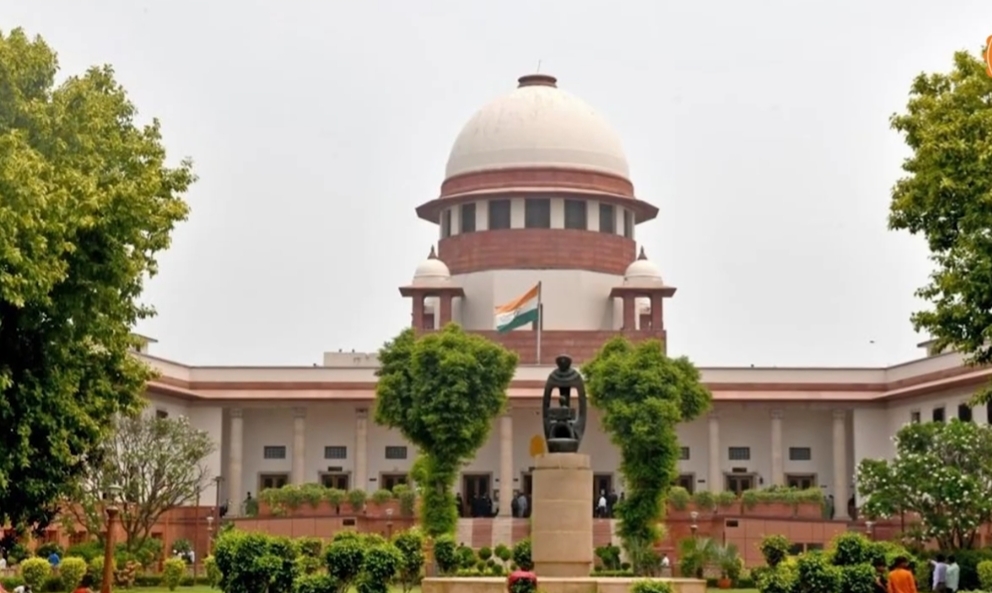
NEW DELHI, 14April 2026 ,In a significant development ahead of the West Bengal Assembly elections, the Supreme Court of India on Tuesday declined to grant interim voting rights to nearly 27 lakh voters whose names were deleted from the electoral rolls during the Special Intensive Revision (SIR) exercise.A Bench comprising Chief Justice Surya Kant and Justice Joymalya Bagchi refused to permit provisional inclusion of these voters, noting that their appeals against exclusion are still pending before the designated electoral tribunals. The court made it clear that allowing such large-scale interim participation could disrupt the sanctity and finality of the electoral rolls at a crucial pre-election stage.
The Bench underscored that the electoral rolls had already been frozen on April 9 in accordance with established procedures, and any intervention at this juncture would risk administrative complications and potential disputes during polling. “Once the rolls are finalised, any ad hoc inclusion may lead to uncertainty and undermine the integrity of the electoral process,” the court observed during the hearing.The petitioners had sought temporary voting rights for those excluded, arguing that denial of franchise—pending adjudication of their claims—would effectively disenfranchise lakhs of genuine voters.
They contended that many exclusions were arbitrary or due to procedural lapses, and that the right to vote, though statutory, carries constitutional significance in a democratic framework.However, the court held that due process must be followed and that remedies already exist within the legal framework. It emphasised that affected individuals have the option of pursuing their claims before electoral tribunals, whose decisions could lead to their inclusion in subsequent supplementary rolls.
The ruling is expected to have far-reaching political implications in West Bengal, where electoral margins are often narrow and voter participation plays a decisive role. Political parties have already expressed sharply divided views on the issue, with opposition groups alleging large-scale disenfranchisement, while the authorities maintain that the revision exercise was conducted transparently and in line with legal norms. With the election process now moving into its final phase, the excluded voters will have to await tribunal decisions for any future inclusion, effectively barring them from participating in the upcoming polls unless relief is granted at a later stage.

We are a multimedia news network. Website : www.7xnews.com Based in New Delhi (India)
Youtube : umakantlakheraspeaks@gmail.com

