

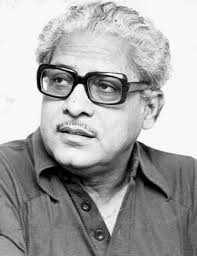
There was a time when walking into a movie theater did not require buckling up for exploding cars, hyper-masculine vendettas, or synthetic, localized grandiosity. It meant stepping into a world that felt exactly like the one you left behind at the ticket counter. At the forefront of this gentle literary and visual revolution stood Basu Chatterjee, a filmmaker who looked at the burgeoning Indian middle class not as a demographic to be ignored, but as an endless repository of romance, humour, and quiet dignity.
Six years after his passing on June 4, 2020, Chatterjee’s expansive body of work serves as a nostalgic yet profoundly progressive time capsule of an evolving India. Alongside contemporaries like Hrishikesh Mukherjee, Gulzar, and Basu Bhattacharya, he pioneered what came to be affectionately termed “middle-of-the-road” cinema. Drawing early thematic sensibilities from the legendary Bimal Roy, Chatterjee bridged the stark chasm between the uncompromising realism of art-house parallel cinema and the escapist melodrama of commercial Bollywood.
From Satirical Ink to the Silver Screen
Born in Ajmer, Rajasthan, on January 10, 1927, Chatterjee’s foundational perspective of Indian society wasn’t shaped in a film studio, but on the newsprint pages of Mumbai’s legendary weekly tabloid, *Blitz*. For eighteen years, he observed the political and social absurdities of the post-independence era through the sharp, observational lens of a political cartoonist and illustrator. This background proved crucial; it gave him an innate understanding of human fallibility, which he later translated into cinema with gentle wit rather than bitter cynicism.
His transition to filmmaking began under the tutelage of Basu Bhattacharya during the shooting of the Raj Kapoor-Waheeda Rehman classic *Teesri Kasam* (1966). By 1969, Chatterjee made his directorial debut with *Sara Akash*, based on Rajendra Yadav’s radical novel. The film won him the Filmfare Best Screenplay Award and signaled the arrival of an auteur who refused to sugarcoat the claustrophobia of domesticity, yet chose to capture it with immense empathy.
The Architecture of the Common Man’s Fairytale
What made Chatterjee’s filmography uniquely comforting was his spatial awareness of the middle class. In *Piya Ka Ghar* (1971), starring Jaya Bhaduri and Anil Dhawan, the central conflict isn’t an existential threat or a sprawling villainous syndicate; it is the utter lack of privacy for a newlywed couple living in a frantic, overcrowded Mumbai *chawl*.
Chatterjee transformed local mass transit into a canvas for modern courtship. In *Baton Baton Mein* (1979), the Western Line local trains running between Bandra and Churchgate become the setting where Amol Palekar and Tina Munim navigate the clumsy, real-world rhythms of urban romance. By shunning grand film sets to shoot on actual commuting routes, he made the ordinary lives of working professionals feel like an accessible fairytale.
His protagonists—most famously personified by the charmingly unassuming Amol Palekar—were intentionally flawed. In the classic romantic comedy *Chhoti Si Baat* (1976), Palekar plays a painfully shy clerk who requires the mentorship of an eccentric retired army man (Ashok Kumar) just to find the courage to express his feelings to his co-worker (Vidya Sinha). The triumphs were minor, the losses felt deeply personal, and the humour was always rooted in situational truth.
A Radical Ally: Rewriting the Female Narrative
While mainstream cinema of the 1970s often relegated women to peripheral roles or hyper-sacrificial caricatures, Chatterjee’s cinema was quietly revolutionary in its feminist outlook. Influenced by literary giants, his stories frequently centered on complex internal architectures of female desire and agency.
*Internal Deliberation:* In *Rajnigandha* (1974), Deepa (Vidya Sinha) is torn between the stable, mundane affection of her current partner and the lingering charm of an old flame. Chatterjee treated her emotional indecision with immense maturity, validating a woman’s right to choose her path without moral judgment.
*Defying Superstition:* In *Swami* (1977), adapted from Sarat Chandra Chattopadhyay’s classic novel and starring Shabana Azmi and Girish Karnad, he deftly pulled apart traditional societal expectations, highlighting a woman’s intellectual and emotional emancipation within the confines of marriage.
Whether exploring extended family chaos in the hilarious blended-family comedy *Khatta Meetha* (1978) or confronting uncomfortable truths in later works like *Kamla Ki Maut* (1986), Chatterjee remained incredibly sensitive to the female gaze.
Shifting Horizons: Doordarshan and Beyond
As the architectural landscape of cinema began to shift toward aggressive action blockbusters in the mid-1980s, Chatterjee fluidly took his signature style to a newer, even more intimate medium: television. Through Doordarshan, he entered millions of Indian living rooms, creating characters that altered the cultural landscape.
With *Rajani* (1985), Priya Tendulkar became an overnight icon, portraying a fiery, unyielding woman who relentlessly took on civic corruption and consumer exploitation. In sharp contrast to the social battles of *Rajani*, Chatterjee also introduced India to its defining noir detective with *Byomkesh Bakshi* (1993). Starring Rajit Kapoor as the titular sleuth, the series adapted Sharadindu Bandyopadhyay’s stories with atmospheric precision, creating an indelible legacy that remains unmatched in Indian television history.
Furthermore, his storytelling was never bound by language or geography. He effortlessly transitioned to Bengali cinema, directing cross-border collaborations like *Hothath Brishti* (1998)—featuring talent from both India and Bangladesh—followed by lighthearted successes like *Chupi Chupi* (2001) and *Tak Jhal Mishti* (2002).
An Enduring Blueprint of Positivity
As chronicled in author Anirudha Bhattacharjee’s authoritative biography *Basu Chatterji: And Middle of the Road Cinema*, the filmmaker’s gift lay in his uncanny ability to uncover magic within the mundane. His movies never demanded intense emotional exhaustion; instead, they functioned as an encouraging pat on the back, reminding us that our small daily battles—be it finding a seat on a crowded train, convincing a parent about a marriage, or sharing a cramped apartment—were inherently beautiful and worthy of the silver screen.
In an age increasingly dominated by visual noise and cinematic grandiosity, Basu Chatterjee’s legacy endures because his films hold up a mirror to our best, most empathetic selves. He remains the ultimate poet of the everyday, reminding us that the greatest stories are often the ones unfolding right inside our own homes.

~Hasnain Naqvi is a former member of the history faculty at St. Xavier’s College, Mumbai….
The opinions expressed here are solely those of the author.