

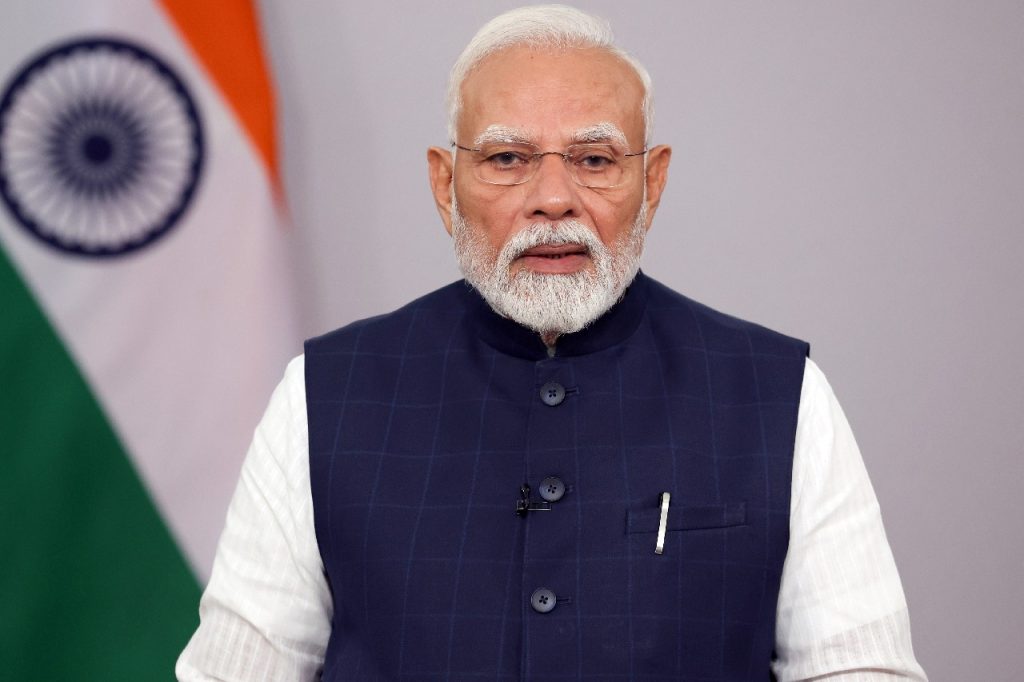
New Delhi On June 10, Prime Minister Narendra Modi achieves the statistical milestone of completing 4,399 days in office uninterruptedly, mathematically overtaking Jawaharlal Nehru’s record of consecutive days as an elected head of government. To the ruling machinery, this is a moment of crowning glory, packaged as an unassailable democratic mandate. Yet, in the laboratory of real-world governance, the length of a tenure is entirely immaterial if it is defined by systemic regression. As the country marks twelve years of this regime, the sobering reality reflects a comprehensive slide across domestic and foreign fronts, breathing a tragic accuracy into Dr. Manmohan Singh’s prophetic warning that Narendra Modi would be a “disaster for the country.”
The Arithmetic of Longevity vs. Institutional Manipulation
The claim of achieving this longevity through a pure democratic mandate unravels when subjected to close scrutiny. This milestone has not been forged through healthy democratic consensus, but rather through a systematic restructuring of electoral safeguards. Under the Election Commission headed by Gyanesh Kumar, the integrity of the voting process has faced historic skepticism.
The implementation of the Special Intensive Revision (SIR) of voter lists has drawn severe condemnation, characterized by critics as a mechanism for arbitrary voter deletions and targeted manipulation of electoral rolls. Through a series of sharp press conferences, Leader of the Opposition Rahul Gandhi exposed this centralized apparatus of *”Vote Chori” (vote theft)*”presenting evidence of how manufactured verdicts have hollowed out constitutional mandates. When vital democratic institutions are remote-controlled to tilt the playing field and legislative amendments shield election officials from accountability, longevity becomes an artifact of manipulation rather than an expression of the popular will.
Economic Despair: Joblessness, Paper Leaks, and the Fury at Jantar Mantar
Domestically, the nationalization of the “Gujarat Model” has delivered a bleak economic landscape defined by deep structural inequality. India grapples with all-time high youth unemployment, where the aspirations of millions are routinely crushed by a collapsed educational administrative machinery. The repeated, scandalous leaks of question papers in the NEET and other national entrance examinations have betrayed an entire generation, a crisis further compounded by the recent CBSE “On-Screen Marking (OSM) fiasco.”
Simultaneously, the war in West Asia has driven domestic inflation to punishing heights, breaking the back of a vulnerable population already reeling under the historical blunders of demonetization and a chaotic GST implementation. The depth of public alienation was recently dramatized at New Delhi’s Jantar Mantar, where the rise and sudden show of strength of the *”Cockroach Janta Party”* served as a fierce, satirical pushback to the Chief Justice’s controversial remarks characterizing desperate litigants and citizens as “cockroaches and parasites.” While a tiny plutocracy of favored conglomerates enjoys unprecedented state patronage and resource funnelling, over a hundred crore citizens struggle for daily subsistence, underlining a deep systemic fracture.
The Illusion of “Vishwaguru” and Geopolitical Retreat
On the external front, the regime’s carefully curated image of a global heavyweight, or *Vishwaguru*, has collapsed into strategic isolation. The landmark trade deal with the United States stands as a historic surrender of India’s strategic autonomy. Under intense pressure from Washington, New Delhi capitulated by drastically cutting its imports of discounted Russian oil, committing instead to a staggering $500 billion purchase pledge of American energy and technology. This submissive shift alienated traditional partners and stripped India of its geopolitical leverage, leaving the domestic economy vulnerable to premium pricing from a recalibrated global energy market.
Furthermore, India’s diplomatic positioning in West Asia has exposed a profound lack of strategic foresight. The Prime Minister’s high-profile visit to Tel Aviv took place just forty-eight hours before the devastating US-Israeli military strikes on Iran. This poorly timed diplomacy created a global impression of alignment with military escalation, deeply damaging India’s stance as a balanced player in the Global South. Closer to home, the absolute collapse of SAARC and the increasing ineffectiveness of a fractured BRICS highlight India’s growing isolation in its own backyard, running counter to decades of respected, non-aligned leadership.
National Security: Optics and Unresolved Conflicts
Even the government’s cornerstone claim of ironclad national security has proven to be a mirage of militarized optics rather than sustained strategic gains. The tragic post-Pahalgam terror attack exposed persistent intelligence gaps within highly monitored zones. While the subsequent military response, *Operation Sindoor*, was heavily marketed as a high-tech triumph of self-reliance, the accompanying suspension of the Indus Waters Treaty and the escalation of cross-border friction have failed to deter asymmetric warfare. From the downplayed territorial incursions by China in Ladakh to the devastating, unaddressed ethnic warfare in Manipur, the regime continuously prefers theatrical spectacles and information suppression over substantive conflict resolution.
> “A nation cannot be successfully governed by slogans shouted from podiums when its social fabric is frayed by communal polarization, its youth are betrayed by systemic corruption, and its sovereignty is compromised by foreign policy surrenders.”
>
A Prophecy Fulfilled
Ultimately, a leader’s legacy is measured not by the ticks of a clock or arbitrary administrative milestones, but by the lived realities of the citizens. Twelve years of extreme centralization, crony capitalism, and institutional co-option have pushed India backward economically, socially, and internationally. As the executive machinery celebrates a mathematical record, the nation confronts a gilded facade hiding a deeply fractured democracy. The length of the tenure is ultimately irrelevant; the systemic damage left in its wake is historic.

~Hasnain Naqvi is a former member of the history faculty at St. Xavier’s College, Mumbai….
The opinions expressed here are solely those of the author.

