

In a striking twist to India’s polarised cow politics, Muslim organisations have joined longstanding calls for stricter bovine protection. Members of the Muslim Vikas Parishad recently formed a human chain in Bhopal, demanding the cow be declared “Mother of the Nation.” Leaders linked to the Ajmer Dargah Sharif and the All India Muslim Jamaat have similarly urged a nationwide ban on cow slaughter and formal recognition of the cow as the national animal, framing these steps as essential for social harmony.
This development collides with a firm official stance. Union Law Minister Arjun Ram Meghwal has categorically stated there is “no proposal to declare cow national animal or ban slaughter nationwide,” adding that “no proposal to ban cow slaughter is presently before the Union Cabinet.”
Yogi’s Cultural Assertion Meets Official Caution
Uttar Pradesh Chief Minister Yogi Adityanath has responded with characteristic cultural conviction. “Many Maulvis and Maulanas are giving statements to declare the cow as the national animal. We said that the cow is our mother… The feeling of respect that one has for their own mother, we hold the exact same feeling,” he declared. He further asserted that the cow is already regarded as “Rashtra Mata” and requires no formal declaration: “Gomata is self-proclaimed Rashtra Mata,” he said, arguing that her revered status stems from deep civilisational roots rather than government notification.
Adityanath’s remarks, delivered amid renewed debate, have drawn both praise for upholding tradition and criticism for potentially diverting attention from governance priorities.
The Enduring Paradox of Sacred Politics
The current episode exposes the contradictions that have long defined India’s bovine debate. Cow slaughter stands banned in most states, particularly those governed by the BJP. Hindu nationalist groups and even the Allahabad High Court have previously advocated similar protections. Yet when Muslim voices echo these positions, the usual political enthusiasm appears muted.
This selective reticence reveals how cow protection often functions less as consistent animal welfare policy and more as an instrument of identity. What was once a rallying cry for mobilisation against a perceived cultural “other” now encounters awkward convergence, complicating established narratives.
History, Myth, and Selective Sanctity
The organised cow protection movement traces back to the colonial era, gaining intensity after an 1888 ruling that the cow held no special legal sanctity. Communal tensions followed, from 19th-century riots to the violent 1966 Parliament march that left several dead. In recent decades, the issue has too often spiralled into vigilantism, with tragic incidents underscoring how rumours can turn lethal.
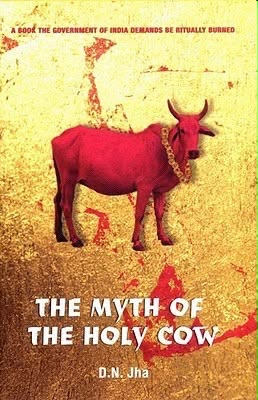
Scholar D.N. Jha’s seminal work, *The Myth of the Holy Cow*(2001), challenged assumptions of eternal sanctity by citing Vedic texts, epics like the Mahabharata and Ramayana, and evidence of beef consumption in ancient dietary practices. Jha argued that the taboo evolved later as a marker of identity. His scholarship faced fierce backlash, including bans and threats, highlighting the tension between historical inquiry and political faith.
The Gap Between Rhetoric and Reality
Practical outcomes further complicate the picture. Reports of hundreds of rotting cow carcasses in Rajasthan’s Jaisalmer—amid a state celebrated for gaushala networks—expose the gulf between veneration and care. Across India, unproductive cattle are frequently abandoned, while many shelters grapple with underfunding and poor infrastructure.
Sanctity itself appears geographically and economically selective. Indigenous “desi” breeds receive symbolic elevation, while crossbreeds serve commercial dairy needs. In several states, including parts of the Northeast and Kerala, cow slaughter remains legal. Meanwhile, India’s buffalo meat export sector, a significant economic contributor, involves diverse business interests beyond any single community.
The Central Question
The Modi government’s current silence on these cross-community demands is telling. Acknowledging them risks diluting a long-cultivated political framework. It would also invite scrutiny of deeper challenges: abandoned cattle, strained gaushalas, economic dependencies, and the selective application of reverence.
As India navigates this debate, the core issue remains unresolved. The question is not merely whether the cow will receive formal national status, but whether symbolic politics will finally yield to genuine, consistent protection for the animal itself—beyond rhetoric, identity, or convenience. Until then, the cow remains India’s most potent political animal.

~Hasnain Naqvi is a former member of the history faculty at St. Xavier’s College, Mumbai….
The opinions expressed here are solely those of the author.

